All Primary Antibodies
Primary antibodies, immunoglobulins that bind to specific proteins or other biomolecules, are used in many research applications and protocols to detect targets of interest. They are developed using different animal hosts, including mouse, rat, rabbit, goat, sheep, and many others.
Monoclonal and Polyclonal Antibodies
One type of primary antibodies, monoclonal antibodies, provides high reproducibility and low cross-reactivity and background noise. Another type, polyclonal antibodies, often costs less and provides greater affinity and quicker binding. Both are produced using plasma B cells, but the former uses the same clone and the latter uses different clones. Monoclonal antibodies require hybridoma cell lines, and polyclonal antibodies do not.
There are also recombinant monoclonal antibodies with similar benefits, like high affinity, scalability, and specificity. They are produced using in vitro cloning of plasma B cells and expression hosts.
Conjugated Primary Antibodies
Antibodies can be labeled with various fluorophores or detection agents or used without labels. Labeled primary antibodies, also known as conjugated primary antibodies, help researchers simplify and streamline their applications. They are coupled with common enzymes and dyes such as Alexa Fluor and often used in protein and cell analysis.
Applications
Antibodies for life sciences applications are used in flow cytometry, western blotting, ELISA, immunohistochemistry, and immunocytochemistry. Secondary antibodies can be added to support the detection and purification of certain antigens. They bind to the primary antibody, which binds to the antigen of interest. Finding the right combination of antibodies can result in greater antigen specificity and a strong, detectable signal.
- (1,286)
- (301)
- (99)
- (14)
- (3)
- (2)
- (96)
- (3)
- (12)
- (1,119)
- (301)
- (132)
- (3)
- (1)
- (3)
- (2)
- (2)
- (1)
- (1)
- (53)
- (479)
- (5)
- (9)
- (1)
- (1)
- (2)
- (193)
- (511)
- (2)
- (1)
- (8)
- (17)
- (63)
- (145)
- (2)
- (6)
- (1)
- (9)
- (98)
- (69)
- (1)
- (1)
- (3)
- (3)
- (13)
- (3)
- (43)
- (3)
- (3)
- (54)
- (18)
- (3)
- (11)
- (61)
- (11)
- (6)
- (3)
- (70)
- (12)
- (3)
- (9)
- (40)
- (9)
- (3)
- (251)
- (3)
- (209)
- (93)
- (202)
- (80)
- (38)
- (21)
- (24)
- (16)
- (2)
- (3)
- (3)
- (630)
- (53)
- (109)
- (15)
- (310)
- (27)
- (543)
- (608)
- (77)
- (335)
- (6)
- (182)
- (2)
- (47)
- (96)
- (3)
- (433)
- (4)
- (3)
- (9)
- (2)
- (3)
- (213)
- (8)
- (22)
- (17)
- (1)
- (1)
- (20)
- (6)
- (3)
- (1,188)
- (1)
- (1,683)
Filtered Search Results
Human IL-18/IL-1F4 Antibody, R&D Systems™
Greener Choice
Offers one or more environmental benefits itemized in the U.S. FTC Green Guides.
Learn More
Offers one or more environmental benefits itemized in the U.S. FTC Green Guides.
Learn More
Mouse Monoclonal Antibody
| Content And Storage | This antibody solution is stable for one year from the date of purchase when stored at -20degreesC. |
|---|---|
| Target Species | Human |
| Host Species | Mouse |
| Conjugate | Unconjugated |
| Applications | Array,Cell Culture,ELISA Capture (Matched Antibody Pair),ELISA Development (Capture),ELISA Development (Detection),ELISA Microarray Development,Flow Cytometry,Functional Assay,Immunocytochemistry,Immunoprecipitation,Luminex,Neutralization |
| Form | Purified |
| Isotype | IgG1 |
| Antigen | IL-18/IL-1F4 |
| Gene Symbols | IL18 |
| Regulatory Status | RUO |
| Purification Method | Protein A or G purified from hybridoma culture supernatant |
| Dilution | Immunoprecipitation, Neutralization, ELISA Capture (Matched Antibody Pair) 2-8 ug/mL |
| Gene Alias | Iboctadekin, IFN-gamma-inducing factor, IGIF, IGIFIL-1 gamma, IL18, IL-18MGC12320, IL-1F4, IL1F4iboctadekin, IL-1g, Interferon gamma-inducing factor, interleukin 18 (interferon-gamma-inducing factor), Interleukin-1 gamma, interleukin-18 |
| Product Type | Antibody |
| Gene ID (Entrez) | 3606 |
| Formulation | 100 μg IgG in 100 μL volume of PBS containing 50% glycerol, pH 7.2. No preservative is contained. with No Preservative |
| Immunogen | Human IL-18/IL-1F4 |
| Classification | Monoclonal |
| Primary or Secondary | Primary |
| Test Specificity | This antibody reacts with human IL-18 on Immunoprecipitation. |
| Clone | 125-2H |
Human/Primate IL-17/IL-17A Biotinylated Antibody, R&D Systems™
Greener Choice
Offers one or more environmental benefits itemized in the U.S. FTC Green Guides.
Learn More
Offers one or more environmental benefits itemized in the U.S. FTC Green Guides.
Learn More
Goat Polyclonal Antibody has been used in 11 publications
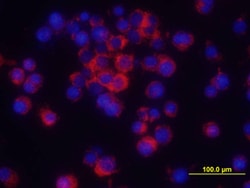
| Content And Storage | Use a manual defrost freezer and avoid repeated freeze-thaw cycles. 12 months from date of receipt, -20 to -70 degreesC as supplied. 1 month, 2 to 8 degreesC under sterile conditions after reconstitution. 6 months, -20 to -70 degreesC under sterile conditions after reconstitution. |
|---|---|
| Target Species | Human,Primate |
| Host Species | Goat |
| Conjugate | Biotin |
| Applications | ELISA Capture (Matched Antibody Pair),ELISA Detection (Matched Antibody Pair),ELISA Detection (Matched Antibody Pair),ELISA Development,ELISA Development (Detection),Functional Assay,Immunohistochemistry,Immunohistochemistry (Paraffin),Luminex |
| Isotype | IgG |
| Gene Accession No. | Q16552 |
| Concentration | LYOPH |
| Antigen | IL-17/IL-17A |
| Gene Symbols | IL17A |
| Regulatory Status | RUO |
| Purification Method | Affinity Purified |
| Dilution | Immunohistochemistry 0.3-15 ug/mL, ELISA Detection (Matched Antibody Pair) 0.1-0.4 ug/mL |
| Gene Alias | CTLA8, CTLA-8, CTLA8cytotoxic T-lymphocyte-associated serine esterase 8, Cytotoxic T-lymphocyte-associated antigen 8, IL17, IL17A, IL-17A, IL-17Acytotoxic T-lymphocyte-associated protein 8, IL-17CTLA-8, IL17interleukin-17A, interleukin 17 (cytotoxic T-lymphocyte-associated serine esterase 8), interleukin 17A |
| Product Type | Antibody |
| Gene ID (Entrez) | 3605 |
| Immunogen | E. coli-derived recombinant human IL-17 Ile20-Ala155 Accession # Q16552 |
| Classification | Polyclonal |
| Reconstitution | Reconstitute at 0.2 mg/mL in sterile PBS. |
| Primary or Secondary | Primary |
| Test Specificity | Detects human and primate IL-17 in direct ELISAs. In sandwich immunoassays, approximately 22% cross-reactivity with rhIL-17A/F heterodimer is observed, and less than 0.05% cross-reactivity with recombinant mouse (rm) IL-17, recombinant human (rh) IL-10, rhIL-12, rhIL-16, rhIFN-gamma , rhIL-17B, rhIL-17C, rhIL-17D, rhIL-17E and rhIL-17F is observed. |
Human/Mouse TNF-alpha Antibody, R&D Systems™
Greener Choice
Offers one or more environmental benefits itemized in the U.S. FTC Green Guides.
Learn More
Offers one or more environmental benefits itemized in the U.S. FTC Green Guides.
Learn More
Goat Polyclonal Antibody has been used in 74 publications
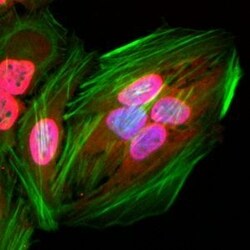
| Content And Storage | Use a manual defrost freezer and avoid repeated freeze-thaw cycles. 12 months from date of receipt, -20 to -70 degreesC as supplied. 1 month, 2 to 8 degreesC under sterile conditions after reconstitution. 6 months, -20 to -70 degreesC under sterile conditions after reconstitution. |
|---|---|
| Target Species | Human,Mouse,Pig,Rat,Transgenic Mouse |
| Host Species | Goat |
| Conjugate | Unconjugated |
| Applications | Bioassay,Cell Culture,CyTOF,ELISA Capture (Matched Antibody Pair),ELISA Capture (Matched Antibody Pair),ELISA Development,ELISA Development (Capture),Flow Cytometry,Flow Cytometry (Intracellular Staining),Functional Assay,Immunocytochemistry,Immunohistochemistry,Immunohistochemistry (Frozen),Immunohistochemistry (Paraffin),Immunoprecipitation,In vivo Assay,Luminex,Neutralization,Western Blot |
| Isotype | IgG |
| Gene Accession No. | P06804 |
| Concentration | LYOPH |
| Antigen | TNF-alpha |
| Gene Symbols | TNF |
| Regulatory Status | RUO |
| Purification Method | Affinity Purified |
| Dilution | Western Blot 0.1 ug/mL, Neutralization 0.1-0.4 ug/mL, Intracellular Staining by Flow Cytometry 2.5 ug/10^6 cells, Immunocytochemistry 5-15 ug/mL, CyTOF-ready, ELISA Capture (Matched Antibody Pair) 0.2-0.8 ug/mL |
| Gene Alias | APC1 protein, Cachectin, Cachetin, DIF, TNF, TNF, monocyte-derived, TNF-a, TNFA, TNFalpha, TNF-alphacachectin, TNFATNF, macrophage-derived, TNFG1F, TNFSF1A, TNFSF2, TNFSF2TNF superfamily, member 2, tumor necrosis factor, tumor necrosis factor (TNF superfamily, member 2), tumor necrosis factor alpha, Tumor necrosis factor ligand superfamily member 2, tumor necrosis factor-alpha |
| Product Type | Antibody |
| Gene ID (Entrez) | 7124 |
| Immunogen | E. coli-derived recombinant mouse TNF-alpha (R&D Systems, Catalog # 410-MT) Leu80-Leu235 Accession # P06804 |
| Classification | Polyclonal |
| Reconstitution | Reconstitute at 0.2 mg/mL in sterile PBS. |
| Primary or Secondary | Primary |
| Test Specificity | Detects mouse TNF-alpha in ELISAs and Western blots. In sandwich immunoassays, approximately 50% cross-reactivity with recombinant rat TNF-alpha is observed and less than 1% cross-reactivity with recombinant human TNF-alpha is observed. |
Invitrogen™ Acetylated Lysine Recombinant Rabbit Monoclonal Antibody (RM101)
Greener Choice
Offers one or more environmental benefits itemized in the U.S. FTC Green Guides.
Learn More
Offers one or more environmental benefits itemized in the U.S. FTC Green Guides.
Learn More
Rabbit Recombinant Monoclonal Antibody
| Content And Storage | -20°C |
|---|---|
| Target Species | Chemical |
| Host Species | Rabbit |
| Conjugate | Unconjugated |
| Applications | ChIP Assay,Immunohistochemistry,Immunoprecipitation,Western Blot,Luminex,Immunocytochemistry,Western Blot |
| Form | Liquid |
| Isotype | IgG |
| Concentration | 1 mg/mL |
| Antigen | Acetylated Lysine |
| Regulatory Status | RUO |
| Purification Method | Protein A |
| Gene Alias | Acetyl Lysine; Acetylated Lysine; Acetyllysine |
| Product Type | Antibody |
| Formulation | PBS with 1% BSA, 50% glycerol and 0.09% sodium azide |
| Immunogen | Acetyllysine-BSA. |
| Classification | Recombinant Monoclonal |
| Primary or Secondary | Primary |
| Clone | RM101 |
Invitrogen™ Phospho-gamma-H2AX (Ser139) Recombinant Rabbit Monoclonal Antibody (RM224)
Greener Choice
Offers one or more environmental benefits itemized in the U.S. FTC Green Guides.
Learn More
Offers one or more environmental benefits itemized in the U.S. FTC Green Guides.
Learn More
Rabbit Recombinant Monoclonal Antibody
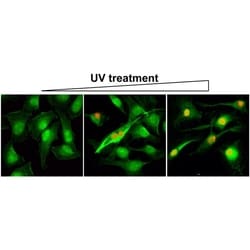
| Content And Storage | -20°C |
|---|---|
| Target Species | Human,Mouse,Rat,All species |
| Host Species | Rabbit |
| Conjugate | Unconjugated |
| Applications | ELISA,Western Blot,Luminex,Immunocytochemistry,Western Blot |
| Form | Liquid |
| Gene Accession No. | P16104, P27661 |
| Isotype | IgG |
| Concentration | 1 mg/mL |
| Antigen | Phospho-gamma-H2AX (Ser139) |
| Gene Symbols | H2AX |
| Regulatory Status | RUO |
| Purification Method | Protein A |
| Gene Alias | gamma H2A X; gamma H2A.X; gamma-H2A.X; gh2ax |
| Gene | H2AX |
| Product Type | Antibody |
| Gene ID (Entrez) | 15270, 3014, 500987 |
| Formulation | PBS with 1% BSA, 50% glycerol and 0.09% sodium azide |
| Immunogen | A phospho-peptide corresponding to Phospho-Histone H2AX (Ser139). |
| Classification | Recombinant Monoclonal |
| Primary or Secondary | Primary |
| Clone | RM224 |
Invitrogen™ Phosphothreonine Recombinant Rabbit Monoclonal Antibody (RM102)
Greener Choice
Offers one or more environmental benefits itemized in the U.S. FTC Green Guides.
Learn More
Offers one or more environmental benefits itemized in the U.S. FTC Green Guides.
Learn More
Rabbit Recombinant Monoclonal Antibody
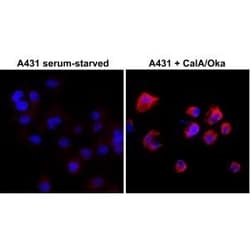
| Content And Storage | -20°C |
|---|---|
| Target Species | Chemical |
| Host Species | Rabbit |
| Conjugate | Unconjugated |
| Applications | ChIP Assay,Immunohistochemistry,Immunoprecipitation,Western Blot,Luminex,Immunocytochemistry |
| Form | Liquid |
| Isotype | IgG |
| Concentration | 1.0 mg/mL |
| Antigen | Phosphothreonine |
| Regulatory Status | RUO |
| Purification Method | Protein A |
| Gene Alias | C4H10NO6P; O-phospho-L-threonine; Phospho-threonine; pThr; Threonine |
| Product Type | Antibody |
| Formulation | PBS with 1% BSA, 50% glycerol and 0.09% sodium azide |
| Immunogen | Mixture of phosphothreonine-BSA conjugate and a phosphothreonine containing peptide. |
| Classification | Recombinant Monoclonal |
| Primary or Secondary | Primary |
| Clone | RM102 |
Invitrogen™ SARS-CoV-2 Spike Protein (RBD) Recombinant Human Monoclonal Antibody (P05DHu)
Human Recombinant Monoclonal Antibody
Non-distribution item offered as a customer accommodation; additional freight charges may apply.
Learn More
| Content And Storage | -20°C, Avoid Freeze/Thaw Cycles |
|---|---|
| Target Species | Virus |
| Host Species | Human |
| Conjugate | Unconjugated |
| Applications | ELISA,Flow Cytometry,Luminex,Immunocytochemistry |
| Form | Liquid |
| Isotype | IgG1 κ |
| Concentration | 0.5 mg/mL |
| Antigen | SARS-CoV-2 Spike Protein (RBD) |
| Regulatory Status | RUO |
| Purification Method | Protein A |
| Gene Alias | Coronavirus; COVID; Covid 19; COVID19; COVID-19; SARS; SARS Coronavirus; SARS CoV; SARS CoV2; SARS CoV-2; SARS Spike Protein; SARS-CoV2; SARS-CoV-2 |
| Product Type | Antibody |
| Formulation | PBS with 0.09% sodium azide; pH 7.2-7.4 |
| Immunogen | This antibody was developed using computationally derived variants of SARS-CoV antibody structures and is shown to bind Spike Protein S1 subunit (RBD) of SARS CoV2. |
| Classification | Recombinant Monoclonal |
| Primary or Secondary | Primary |
| Clone | P05DHu |
Invitrogen™ SARS-CoV-2 Spike Protein (RBD) Recombinant Human Monoclonal Antibody (T01KHu)
Human Recombinant Monoclonal Antibody
Non-distribution item offered as a customer accommodation; additional freight charges may apply.
Learn More
| Content And Storage | -20°C, Avoid Freeze/Thaw Cycles |
|---|---|
| Target Species | Virus |
| Host Species | Human |
| Conjugate | Unconjugated |
| Applications | ELISA,Flow Cytometry,Neutralization,Luminex,Immunocytochemistry |
| Form | Liquid |
| Isotype | IgG1 κ |
| Concentration | 0.5 mg/mL |
| Antigen | SARS-CoV-2 Spike Protein (RBD) |
| Regulatory Status | RUO |
| Purification Method | Protein A |
| Gene Alias | Coronavirus; COVID; Covid 19; COVID19; COVID-19; SARS; SARS Coronavirus; SARS CoV; SARS CoV2; SARS CoV-2; SARS Spike Protein; SARS-CoV2; SARS-CoV-2 |
| Product Type | Antibody |
| Formulation | PBS with 0.09% sodium azide; pH 7.2-7.4 |
| Immunogen | This antibody was developed using computationally derived variants of SARS-CoV antibody structures and is shown to bind Spike Protein S1 subunit (RBD) of SARS CoV2. |
| Classification | Recombinant Monoclonal |
| Primary or Secondary | Primary |
| Clone | T01KHu |
Invitrogen™ SARS-CoV-2 Spike Protein (RBD) Recombinant Human Monoclonal Antibody (P06DHu)
Human Recombinant Monoclonal Antibody
Non-distribution item offered as a customer accommodation; additional freight charges may apply.
Learn More
| Content And Storage | -20°C, Avoid Freeze/Thaw Cycles |
|---|---|
| Target Species | Virus |
| Host Species | Human |
| Conjugate | Unconjugated |
| Applications | ELISA,Flow Cytometry,Neutralization,Luminex,Immunocytochemistry |
| Form | Liquid |
| Isotype | IgG1 λ |
| Concentration | 0.5 mg/mL |
| Antigen | SARS-CoV-2 Spike Protein (RBD) |
| Regulatory Status | RUO |
| Purification Method | Protein A |
| Gene Alias | Coronavirus; COVID; Covid 19; COVID19; COVID-19; SARS; SARS Coronavirus; SARS CoV; SARS CoV2; SARS CoV-2; SARS Spike Protein; SARS-CoV2; SARS-CoV-2 |
| Product Type | Antibody |
| Formulation | PBS with 0.09% sodium azide; pH 7.2-7.4 |
| Immunogen | This antibody was developed using computationally derived variants of SARS-CoV antibody structures and is shown to bind Spike Protein S1 subunit (RBD) of SARS CoV2. |
| Classification | Recombinant Monoclonal |
| Primary or Secondary | Primary |
| Clone | P06DHu |
Invitrogen™ Histone H2B Recombinant Rabbit Monoclonal Antibody (RM230)
Greener Choice
Offers one or more environmental benefits itemized in the U.S. FTC Green Guides.
Learn More
Offers one or more environmental benefits itemized in the U.S. FTC Green Guides.
Learn More
Rabbit Recombinant Monoclonal Antibody
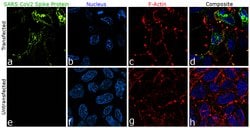
| Content And Storage | -20°C, Avoid Freeze/Thaw Cycles |
|---|---|
| Target Species | Human,Monkey |
| Host Species | Rabbit |
| Conjugate | Unconjugated |
| Applications | ELISA,Immunocytochemistry,Luminex,Western Blot |
| Form | Liquid |
| Gene Accession No. | A0A2R8Y619, O60814, P06899, P0C1H6, P23527, P33778, P57053, P58876, P62807, Q16778, Q5QNW6, Q7Z2G1, Q8N257, Q93079, Q96A08, Q99877, Q99879, Q99880 |
| Isotype | IgG |
| Concentration | 1 mg/mL |
| Antigen | Histone H2B |
| Gene Symbols | H2B, H2bc1, H2BC10, H2BC11, H2BC12, H2BC13, H2BC14, H2BC15, H2BC17, H2bc18, H2BC21, H2BC3, H2BC4, H2BC5, H2BC8, H2BC9, H2BE1, H2BU1, H2BW1, H2BW2, LOC102724334 |
| Regulatory Status | RUO |
| Purification Method | Protein A |
| Gene Alias | 2610022J01Rik; Acetyl-Histone H2; AV127319; bA317E16.3; CG17949; CG17949-PA; CG33868; CG33868-PA; CG33870; CG33870-PA; CG33872; CG33872-PA; CG33874; CG33874-PA; CG33876; CG33876-PA; CG33878; CG33878-PA; CG33880; CG33880-PA; CG33882; CG33882-PA; CG33884; CG33884-PA; CG33886; CG33886-PA; CG33888; CG33888-PA; CG33890; CG33890-PA; CG33892; CG33892-PA; CG33894; CG33894-PA; CG33896; CG33896-PA; CG33898; CG33898-PA; CG33900; CG33900-PA; CG33902; CG33902-PA; CG33904; CG33904-PA; CG33906; CG33906-PA; CG33908; CG33908-PA; CG33910; CG33910-PA; dJ160A22.3; dJ193B12.2; dJ221C16.3; dJ221C16.6; dJ221C16.8; dJ97D16.4; Dmel\CG17949; Dmel\CG33868; Dmel\CG33870; Dmel\CG33872; Dmel\CG33874; Dmel\CG33876; Dmel\CG33878; Dmel\CG33880; Dmel\CG33882; Dmel\CG33884; Dmel\CG33886; Dmel\CG33888; Dmel\CG33890; Dmel\CG33892; Dmel\CG33894; Dmel\CG33896; Dmel\CG33898; Dmel\CG33900; Dmel\CG33902; Dmel\CG33904; Dmel\CG33906; Dmel\CG33908; Dmel\CG33910; Dmel_CG17949; Dmel_CG33868; Dmel_CG33870; Dmel_CG33872; Dmel_CG33874; Dmel_CG33876; Dmel_CG33878; Dmel_CG33880; Dmel_CG33882; Dmel_CG33884; Dmel_CG33886; Dmel_CG33888; Dmel_CG33890; Dmel_CG33892; Dmel_CG33894; Dmel_CG33896; Dmel_CG33898; Dmel_CG33900; Dmel_CG33902; Dmel_CG33904; Dmel_CG33906; Dmel_CG33908; Dmel_CG33910; fj05g08; GL105; H2B; H2B 291A; H2B 291B; H2b 613; H2B clustered histone 1; H2B clustered histone 15; H2B clustered histone 17; H2B clustered histone 19; H2B clustered histone 2, pseudogene; H2B clustered histone 21; H2B clustered histone 5; H2B clustered histone 8; H2B GL105 antibody; H2B histone family member M; H2B histone family member W testis-specific; H2B histone family member W, testis specific; H2B histone family, member A; H2B histone family, member B; H2B histone family, member C; H2B histone family, member D; H2B histone family, member E; H2B histone family, member F; H2B histone family, member J; H2B histone family, member K; H2B histone family, member L; H2B histone family, member M; H2B histone family, member N; H2B histone family, member Q; H2B histone family, member R; H2B histone family, member S; H2B histone family, member T; H2B histone family, member U, (testis-specific); H2B histone family, member W, testis-specific; H2B I; H2B II; H2B III; H2B IV; H2B K; H2B type 12; H2B VI; H2B VII; H2B.1; H2B.1 antibody; H2B.1A; H2B.1B; H2B.2; H2B.U histone 1; H2B.W histone 1; H2B/a; H2B/b; H2B/c; H2B/d; H2B/e; H2B/f; H2B/g; H2B/h; H2B/I; H2B/j; H2B/k; H2B/l; H2B/n; H2B/o; H2B/q; H2B/r; H2B/S; H2B/t; H2B1; H2B1.1; H2B1.2; h2B-143; H2B2; H2b-221; H2b-291b; H2b-613; H2Bb; H2BC1; H2BC10; H2BC15; H2BC17; H2BC19; H2BC21; H2BC2P; H2BC4; H2BC5; H2BC6; H2BC7; H2BC8; H2b-f; H2BFA; H2BFAiii; H2BFB; H2BFC; H2BFD; H2BFE; H2BFF; H2BFG; H2BFH; H2BFJ; H2BFK; H2BFL; H2BFM; H2BFN; H2BFO; H2BFQ; h2bfr; H2BFS; H2BFT; H2BFU; H2BFWT; H2BGL105; H2B-I; H2B-II; H2B-III; H2B-IV; H2BJ; H2b-j; H2BK; H2BK12ac; H2BK15ac; H2BK5ac; H2b-l; H2b-n; H2BQ; H2BS14; H2BS14p; H2BU1; H2B-VI; H2B-VII; H2BW1; HIRA-interacting protein 1; HIRA-interacting protein 2; HIRIP1; HIRIP2; His2B; His2B:CG17949; His2B:CG17949-PA; His2B:CG33868; His2B:CG33868-PA; His2B:CG33870; His2B:CG33870-PA; His2B:CG33872; His2B:CG33872-PA; His2B:CG33874; His2B:CG33874-PA; His2B:CG33876; His2B:CG33876-PA; His2B:CG33878; His2B:CG33878-PA; His2B:CG33880; His2B:CG33880-PA; His2B:CG33882; His2B:CG33882-PA; His2B:CG33884; His2B:CG33884-PA; His2B:CG33886; His2B:CG33886-PA; His2B:CG33888; His2B:CG33888-PA; His2B:CG33890; His2B:CG33890-PA; His2B:CG33892; His2B:CG33892-PA; His2B:CG33894; His2B:CG33894-PA; His2B:CG33896; His2B:CG33896-PA; His2B:CG33898; His2B:CG33898-PA; His2B:CG33900; His2B:CG33900-PA; His2B:CG33902; His2B:CG33902-PA; His2B:CG33904; His2B:CG33904-PA; His2B:CG33906; His2B:CG33906-PA; His2B:CG33908; His2B:CG33908-PA; His2B:CG33910; His2B:CG33910-PA; HIST1H2B7; HIST1H2B7L3; hist1h2ba; HIST1H2BB; HIST1H2BB antibody; Hist1h2bc; HIST1H2BD; HIST1H2BE; HIST1H2BF; HIST1H2BG; Hist1h2bh; HIST1H2BI; Hist1h2bj; hist1h2bj.L; hist1h2bj.S; HIST1H2BK; HIST1H2BL |
| Gene | H2BC12 |
| Product Type | Antibody |
| Gene ID (Entrez) | 102724334, 114483833, 128312, 158983, 255626, 286436, 3017, 3018, 440689, 8339, 8340, 8341, 8342, 8345, 8346, 8347, 8348, 8349, 85236, 8970 |
| Formulation | PBS with 50% glycerol, 1% BSA and 0.09% sodium azide; pH 7.2-7.4 |
| Immunogen | Peptide corresponding to the C-terminus of human Histone H2B. |
| Classification | Recombinant Monoclonal |
| Primary or Secondary | Primary |
| Clone | RM230 |
Invitrogen™ H4K20ac Recombinant Rabbit Monoclonal Antibody (RM205), ChIP-Verified
Rabbit Recombinant Monoclonal Antibody
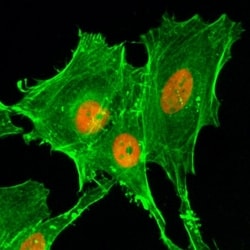
| Content And Storage | -20°C |
|---|---|
| Target Species | Human,Yeast |
| Host Species | Rabbit |
| Conjugate | Unconjugated |
| Applications | ChIP Assay,ELISA,Western Blot,Luminex,Immunocytochemistry |
| Form | Liquid |
| Gene Accession No. | P62805 |
| Isotype | IgG |
| Concentration | 1 mg/mL |
| Antigen | H4K20ac |
| Gene Symbols | H4-16, H4C1, H4C11, H4C14, H4C2, H4C5, H4C9 |
| Regulatory Status | RUO |
| Purification Method | Protein A |
| Gene Alias | acetyl Histone H4; Acetyl-H4 K20; Acetyl-H4 Lys20; Acetyl-Histone H4 K20; Acetyl-Histone H4 Lys20; FO108; H4; H4 histone family, member A; H4 histone family, member I; H4 histone family, member J; H4 histone family, member M; H4 histone family, member N; H4 histone, family 2; H4 K20ac; H4/A; H4/B; H4/C; H4/D; H4/E; H4/G; H4/H; H4/I; H4/j; H4/K; H4/M; H4/n; H4/O; H4/p; H4-16; H4C1; H4C11; H4C12; H4C13; H4C14; H4C15; H4C2; H4C3; H4C4; H4C5; H4C6; H4C8; H4C9; H4F2; H4FA; H4FB; H4FC; H4FD; H4FE; H4FG; H4FH; H4FI; H4FJ; H4FK; H4FM; H4FN; H4FO; H4K20; H4K20a; H4Lys20ac; H4M; HIST1H4; HIST1H4A; HIST1H4B; HIST1H4C; HIST1H4D; HIST1H4E; HIST1H4F; HIST1H4H; HIST1H4I; HIST1H4J; HIST1H4K; HIST1H4L; HIST2H4; HIST2H4A; HIST2H4B; HIST4H4; histone 1, H4a; histone 1, H4b; histone 1, H4e; histone 1, H4i; histone 2, H4a; Histone 4; Histone 4 family, member M; histone 4, H4; histone cluster 1, H4a; histone cluster 1, H4b; histone cluster 1, H4e; histone cluster 1, H4i; histone cluster 2, H4a; Histone Cluster 4; histone cluster 4, H4; histone family member; histone H4; Histone H4 acetyl; Histone H4A; Histone H4K20; Histone H4K20ac; histone IV, family 2 |
| Gene | H4C1 |
| Product Type | Antibody |
| Gene ID (Entrez) | 121504, 8294, 8359, 8363, 8366, 8367, 8370 |
| Formulation | PBS with 50% glycerol, 1% BSA and 0.09% sodium azide |
| Immunogen | An acetyl-peptide corresponding to Acetyl-Histone H4 (Lys20). |
| Classification | Recombinant Monoclonal |
| Primary or Secondary | Primary |
| Clone | RM205 |
Invitrogen™ H3K36ac Recombinant Rabbit Monoclonal Antibody (RM154), ChIP-Verified
Greener Choice
Offers one or more environmental benefits itemized in the U.S. FTC Green Guides.
Learn More
Offers one or more environmental benefits itemized in the U.S. FTC Green Guides.
Learn More
Rabbit Recombinant Monoclonal Antibody
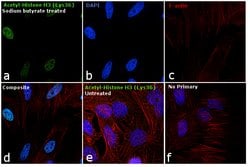
| Content And Storage | -20°C, Avoid Freeze/Thaw Cycles |
|---|---|
| Target Species | Human |
| Host Species | Rabbit |
| Conjugate | Unconjugated |
| Applications | Peptide Array,ChIP Assay,ELISA,Western Blot,Luminex,Immunocytochemistry |
| Form | Liquid |
| Gene Accession No. | P68431, Q71DI3 |
| Isotype | IgG |
| Concentration | 1 mg/mL |
| Antigen | H3K36ac |
| Gene Symbols | H3C1, H3C10, H3C12, H3C14, H3C15, H3C2, H3C7 |
| Regulatory Status | RUO |
| Purification Method | Protein A |
| Gene Alias | 9430068D06Rik; Acetyl H3; Acetyl Histone H3; Acetyl-H3 K36; Acetyl-H3 Lys36; Acetyl-Histone H3 K36; Acetyl-Histone H3 Lys36; B0035.7; CELE_T10C6.12; CG31613; CG31613-PA; CG33803; CG33806; CG33809; CG33812; CG33815; CG33818; CG33821; CG33824; CG33827; CG33830; CG33833; CG33836; CG33839; CG33842; CG33845; CG33848; CG33851; CG33854; CG33857; CG33860; CG33863; CG33866; Dmel\CG31613; Dmel_CG31613; F07B7.10; F07B7.3; F08G2.2; F17E9.13; F35H10.1; F45F2.4; F54E12.5; F55G1.10; H02I12.7; H3; H3 histone; H3 histone family, member A; H3 histone family, member C; H3 histone family, member H; H3 histone family, member I; H3 histone family, member K; H3 histone family, member L; H3 histone family, member M; H3 histone, family 2; H3 histone, family 3A; H3 histone, family 3B; H3 histone, family 3B (H3.3B); H3 histone, family 3C; H3 K36ac; H3.1; H3.1-221; H3.1-291; H3.1-I; H3.2; H3.2-221; H3.2-614; H3.2-615; H3.2-616; h3.2a; H3.3A; H3.3B; H3.5; H3/A; H3/b; H3/c; H3/d; H3/f; H3/h; H3/i; H3/j; H3/k; H3/l; H3/M; H3/n; H3/o; H3-143; H3-291; H3-3a; H3-3b; H3-53; H3-614; H3a; H3b; H3-B; H3c1; H3c10; H3c11; H3C12; H3C2; H3C3; H3C4; H3C6; H3C7; H3c8; H3f; H3-F; H3F1K; H3F2; H3F3; H3f3a; H3f3b; H3F3C; H3FA; H3FB; H3FC; H3FC HIST1H3C; H3FD; H3FF; H3FH; H3FI; H3FJ; H3FK; H3FL; H3FM; H3FN; H3g; H3h; H3i; H3K36; H3L-like histone; H3Lys36ac; h3r; his-12; his-16; his-19; his-21; His3; his-3; His3:CG31613; His3:CG31613-PA; His3:CG33803; His3:CG33806; His3:CG33809; His3:CG33812; His3:CG33815; His3:CG33818; His3:CG33821; His3:CG33824; His3:CG33827; His3:CG33830; His3:CG33833; His3:CG33836; His3:CG33839; His3:CG33842; His3:CG33845; His3:CG33848; His3:CG33851; His3:CG33854; His3:CG33857; His3:CG33860; His3:CG33863; His3:CG33866; his-30; his-33; his-43; his-47; his-51; his-53; his-57; his-61; his-65; his-68; his-7; Hist1; Hist1h3a; HIST1H3B; Hist1h3c; HIST1H3D; HIST1H3E; HIST1H3F; Hist1h3g; hist1h3g.L; HIST1H3H; HIST1H3I; HIST1H3J; hist2h3; HIST2H3A; Hist2h3b; HIST2H3C; Hist2h3c1; Hist2h3c2; Hist2h3c2-ps; Hist2h3ca1; Hist2h3ca2; HIST2H3D; histone 1, H3a; histone 1, H3b; histone 1, H3c; histone 1, H3f; histone 1, H3g; histone 1, H3h; histone 2, H3a; histone 2, H3c; histone 2, H3c2; histone 2, H3ca2; Histone 3; histone cluster 1, H3a; histone cluster 1, H3b; histone cluster 1, H3c; histone cluster 1, H3f; histone cluster 1, H3g; histone cluster 1, H3g protein L homeolog; histone cluster 1, H3h; histone cluster 2, H3a; histone cluster 2, H3c; histone cluster 2, H3c2; histone cluster 2, H3c2, pseudogene; histone gene complex 1; Histone H2A; Histone H3; histone H3.1; Histone H3.2; histone H3.3; histone H3.3B-like; histone H3.3C; Histone H3.5; histone H3/a; Histone H3/b; Histone H3/c; Histone H3/d; Histone H3/f; Histone H3/h; histone H3/i; Histone H3/j; Histone H3/k; histone H3/l; Histone H3/m; histone H3/o; Histone H3K36; histone variant H3.5; histone1, H3c; K06C4.11; K06C4.3; M32460; M32461; PP781; T10C6.12; T23D8.6; XELAEV_18028537mg; ZK131.10; ZK131.6 |
| Gene | H3C15 |
| Product Type | Antibody |
| Gene ID (Entrez) | 126961, 333932, 8350, 8356, 8357, 8358, 8968 |
| Formulation | PBS with 50% glycerol, 1% BSA and 0.09% sodium azide; pH 7.2-7.4 |
| Immunogen | Acetyl-peptide corresponding to the Acetyl-Histone H3 (Lys36). |
| Classification | Recombinant Monoclonal |
| Primary or Secondary | Primary |
| Clone | RM154 |
Invitrogen™ H3K4ac Recombinant Rabbit Monoclonal Antibody (RM149), ChIP-Verified
Greener Choice
Offers one or more environmental benefits itemized in the U.S. FTC Green Guides.
Learn More
Offers one or more environmental benefits itemized in the U.S. FTC Green Guides.
Learn More
Rabbit Recombinant Monoclonal Antibody
| Content And Storage | -20°C, Avoid Freeze/Thaw Cycles |
|---|---|
| Target Species | Human,Mouse |
| Host Species | Rabbit |
| Conjugate | Unconjugated |
| Applications | Peptide Array,ChIP Assay,ELISA,Western Blot,Luminex,Immunocytochemistry |
| Form | Liquid |
| Gene Accession No. | P68431, P68433, P84228, Q71DI3 |
| Isotype | IgG |
| Concentration | 1 mg/mL |
| Antigen | H3K4ac |
| Gene Symbols | H3C1, H3C10, H3C12, H3C14, H3C15, H3C2, H3C7 |
| Regulatory Status | RUO |
| Purification Method | Protein A |
| Gene Alias | 9430068D06Rik; Acetyl H3; Acetyl Histone H3; Acetyl-H3 K4; Acetyl-H3 Lys4; Acetyl-Histone H3 K4; Acetyl-Histone H3 Lys4; B0035.7; CELE_T10C6.12; CG31613; CG31613-PA; CG33803; CG33806; CG33809; CG33812; CG33815; CG33818; CG33821; CG33824; CG33827; CG33830; CG33833; CG33836; CG33839; CG33842; CG33845; CG33848; CG33851; CG33854; CG33857; CG33860; CG33863; CG33866; Dmel\CG31613; Dmel_CG31613; F07B7.10; F07B7.3; F08G2.2; F17E9.13; F35H10.1; F45F2.4; F54E12.5; F55G1.10; H02I12.7; H3; H3 histone; H3 histone family, member A; H3 histone family, member C; H3 histone family, member H; H3 histone family, member I; H3 histone family, member K; H3 histone family, member L; H3 histone family, member M; H3 histone, family 2; H3 histone, family 3A; H3 histone, family 3B; H3 histone, family 3B (H3.3B); H3 histone, family 3C; H3 K4ac; H3.1; H3.1-221; H3.1-291; H3.1-I; H3.2; H3.2-221; H3.2-614; H3.2-615; H3.2-616; h3.2a; H3.3A; H3.3B; H3.5; H3/A; H3/b; H3/c; H3/d; H3/f; H3/h; H3/i; H3/j; H3/k; H3/l; H3/M; H3/n; H3/o; H3-143; H3-291; H3-3a; H3-3B; H3-53; H3-614; H3a; H3b; H3-B; H3C1; H3c10; H3c11; H3C12; H3C2; H3C3; H3C4; H3C6; H3C7; H3c8; H3f; H3-F; H3F1K; H3F2; H3F3; H3F3A; H3f3b; H3F3C; H3FA; H3FB; H3FC; H3FC HIST1H3C; H3FD; H3FF; H3FH; H3FI; H3FJ; H3FK; H3FL; H3FM; H3FN; H3g; H3h; H3i; H3K4; H3L-like histone; H3Lys4ac; h3r; his-12; his-16; his-19; his-21; His3; his-3; His3:CG31613; His3:CG31613-PA; His3:CG33803; His3:CG33806; His3:CG33809; His3:CG33812; His3:CG33815; His3:CG33818; His3:CG33821; His3:CG33824; His3:CG33827; His3:CG33830; His3:CG33833; His3:CG33836; His3:CG33839; His3:CG33842; His3:CG33845; His3:CG33848; His3:CG33851; His3:CG33854; His3:CG33857; His3:CG33860; His3:CG33863; His3:CG33866; his-30; his-33; his-43; his-47; his-51; his-53; his-57; his-61; his-65; his-68; his-7; Hist1; HIST1H3A; HIST1H3B; HIST1H3C; HIST1H3D; HIST1H3E; Hist1h3f; hist1h3g; hist1h3g.L; Hist1h3h; HIST1H3I; HIST1H3J; hist2h3; HIST2H3A; Hist2h3b; HIST2H3C; Hist2h3c1; Hist2h3c2; Hist2h3c2-ps; Hist2h3ca1; Hist2h3ca2; HIST2H3D; histone 1, H3a; histone 1, H3b; histone 1, H3c; histone 1, H3f; histone 1, H3g; histone 1, H3h; histone 2, H3a; histone 2, H3c; histone 2, H3c2; histone 2, H3ca2; Histone 3; histone cluster 1, H3a; histone cluster 1, H3b; histone cluster 1, H3c; histone cluster 1, H3f; histone cluster 1, H3g; histone cluster 1, H3g protein L homeolog; histone cluster 1, H3h; histone cluster 2, H3a; histone cluster 2, H3c; histone cluster 2, H3c2; histone cluster 2, H3c2, pseudogene; histone gene complex 1; Histone H2A; Histone H3; histone H3.1; Histone H3.2; histone H3.3; histone H3.3B-like; histone H3.3C; Histone H3.5; histone H3/a; Histone H3/b; Histone H3/c; Histone H3/d; Histone H3/f; Histone H3/h; histone H3/i; Histone H3/j; Histone H3/k; histone H3/l; Histone H3/m; histone H3/o; Histone H3K4; histone variant H3.5; histone1, H3c; K06C4.11; K06C4.3; M32460; M32461; PP781; T10C6.12; T23D8.6; XELAEV_18028537mg; ZK131.10; ZK131.6 |
| Gene | H3C15 |
| Product Type | Antibody |
| Gene ID (Entrez) | 126961, 260423, 319150, 319152, 333932, 360198, 8350, 8356, 8357, 8358, 8968, 97114 |
| Formulation | PBS with 50% glycerol, 1% BSA and 0.09% sodium azide; pH 7.2-7.4 |
| Immunogen | Acetyl-peptide corresponding to the Acetyl-Histone H3 (Lys4). |
| Classification | Recombinant Monoclonal |
| Primary or Secondary | Primary |
| Clone | RM149 |
Human Park7/DJ-1 Biotinylated Antibody, R&D Systems™
Greener Choice
Offers one or more environmental benefits itemized in the U.S. FTC Green Guides.
Learn More
Offers one or more environmental benefits itemized in the U.S. FTC Green Guides.
Learn More
Goat Polyclonal Antibody
| Content And Storage | Use a manual defrost freezer and avoid repeated freeze-thaw cycles. 12 months from date of receipt, -20 to -70 degreesC as supplied. 1 month, 2 to 8 degreesC under sterile conditions after reconstitution. 6 months, -20 to -70 degreesC under sterile conditions after reconstitution. |
|---|---|
| Target Species | Human |
| Host Species | Goat |
| Conjugate | Biotin |
| Applications | Luminex (Detection),Luminex,Western Blot |
| Isotype | IgG |
| Gene Accession No. | Q99497 |
| Concentration | LYOPH |
| Antigen | Park7/DJ-1 |
| Gene Symbols | PARK7 |
| Regulatory Status | RUO |
| Purification Method | Affinity Purified |
| Dilution | Western Blot 0.1 ug/mL |
| Gene Alias | DJ1, DJ-1, DJ1FLJ34360, EC 3.4, FLJ27376, FLJ92274, Oncogene DJ1, Parkinson disease (autosomal recessive, early onset) 7, Parkinson disease protein 7, protein DJ-1 |
| Product Type | Antibody |
| Gene ID (Entrez) | 11315 |
| Immunogen | E. coli-derived recombinant human Park7/DJ-1 Met1-Asp189 Accession # Q99497 |
| Classification | Polyclonal |
| Reconstitution | Reconstitute at 0.2 mg/mL in sterile PBS. |
| Primary or Secondary | Primary |
| Test Specificity | Detects human Park7/DJ-1 in Western blots. In this format, approximately 40% cross-reactivity with recombinant mouse Park7 is observed. |
Invitrogen™ H4K12me1 Recombinant Rabbit Monoclonal Antibody (RM458)
Greener Choice
Offers one or more environmental benefits itemized in the U.S. FTC Green Guides.
Learn More
Offers one or more environmental benefits itemized in the U.S. FTC Green Guides.
Learn More
Rabbit Recombinant Monoclonal Antibody
Non-distribution item offered as a customer accommodation; additional freight charges may apply.
Learn More
| Content And Storage | -20°C |
|---|---|
| Target Species | Human |
| Host Species | Rabbit |
| Conjugate | Unconjugated |
| Applications | ELISA,Western Blot,Luminex |
| Form | Liquid |
| Isotype | IgG |
| Concentration | 1 mg/mL |
| Antigen | H4K12me1 |
| Regulatory Status | RUO |
| Purification Method | Protein A |
| Product Type | Antibody |
| Formulation | PBS with 1% BSA, 50% glycerol and 0.09% sodium azide |
| Immunogen | A monomethyl-peptide corresponding to monomethyl-Histone H4 (Lys12). |
| Classification | Recombinant Monoclonal |
| Primary or Secondary | Primary |
| Clone | RM458 |