Antibodies
Antibodies are glycoproteins that serve an essential role in the immune system to protects animals from infection, or the cytotoxic effects of foreign compounds, by binding with high affinity to invasive molecules; classified as primary or secondary.
Primary Antibodies
(2,817)
Secondary Antibodies
(259)
Antibody Panels and Kits
(80)
Isotype Controls and Standards
(19)
Filtered Search Results
Products from some of our suppliers do not display in filtered search results. Please
clear all filters
to see these products.
Search Within Results
Keyword Search:
Clear All
1
–
15
of
2,942
results
R&D Systems™ Human TIMP Panel Luminex™ Performance Control
Luminex bead-based multiplex assays are designed to provide accurate, reproducible results for every target analyte.
R&D Systems™ Human TGF-beta Panel Luminex™ Performance Control
Luminex bead-based multiplex assays are designed to provide accurate, reproducible results for every target analyte.
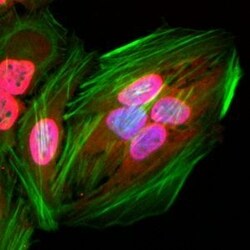
Invitrogen™ Acetylated Lysine Recombinant Rabbit Monoclonal Antibody (RM101)
Greener Choice
Offers one or more environmental benefits itemized in the U.S. FTC Green Guides.
Learn More
Greener Choice
Offers one or more environmental benefits itemized in the U.S. FTC Green Guides.
Learn More
Offers one or more environmental benefits itemized in the U.S. FTC Green Guides.
Learn More
Rabbit Recombinant Monoclonal Antibody
| Content And Storage | -20°C |
|---|---|
| Target Species | Chemical |
| Host Species | Rabbit |
| Conjugate | Unconjugated |
| Applications | ChIP Assay,Immunohistochemistry,Immunoprecipitation,Western Blot,Luminex,Immunocytochemistry,Western Blot |
| Form | Liquid |
| Isotype | IgG |
| Concentration | 1 mg/mL |
| Antigen | Acetylated Lysine |
| Regulatory Status | RUO |
| Purification Method | Protein A |
| Gene Alias | Acetyl Lysine; Acetylated Lysine; Acetyllysine |
| Product Type | Antibody |
| Formulation | PBS with 1% BSA, 50% glycerol and 0.09% sodium azide |
| Immunogen | Acetyllysine-BSA. |
| Classification | Recombinant Monoclonal |
| Primary or Secondary | Primary |
| Clone | RM101 |
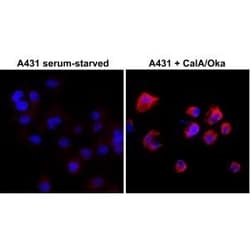
Invitrogen™ Phosphothreonine Recombinant Rabbit Monoclonal Antibody (RM102)
Greener Choice
Offers one or more environmental benefits itemized in the U.S. FTC Green Guides.
Learn More
Greener Choice
Offers one or more environmental benefits itemized in the U.S. FTC Green Guides.
Learn More
Offers one or more environmental benefits itemized in the U.S. FTC Green Guides.
Learn More
Rabbit Recombinant Monoclonal Antibody
| Content And Storage | -20°C |
|---|---|
| Target Species | Chemical |
| Host Species | Rabbit |
| Conjugate | Unconjugated |
| Applications | ChIP Assay,Immunohistochemistry,Immunoprecipitation,Western Blot,Luminex,Immunocytochemistry |
| Form | Liquid |
| Isotype | IgG |
| Concentration | 1.0 mg/mL |
| Antigen | Phosphothreonine |
| Regulatory Status | RUO |
| Purification Method | Protein A |
| Gene Alias | C4H10NO6P; O-phospho-L-threonine; Phospho-threonine; pThr; Threonine |
| Product Type | Antibody |
| Formulation | PBS with 1% BSA, 50% glycerol and 0.09% sodium azide |
| Immunogen | Mixture of phosphothreonine-BSA conjugate and a phosphothreonine containing peptide. |
| Classification | Recombinant Monoclonal |
| Primary or Secondary | Primary |
| Clone | RM102 |
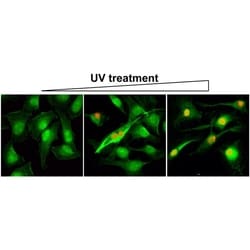
Invitrogen™ Phospho-gamma-H2AX (Ser139) Recombinant Rabbit Monoclonal Antibody (RM224)
Greener Choice
Offers one or more environmental benefits itemized in the U.S. FTC Green Guides.
Learn More
Greener Choice
Offers one or more environmental benefits itemized in the U.S. FTC Green Guides.
Learn More
Offers one or more environmental benefits itemized in the U.S. FTC Green Guides.
Learn More
Rabbit Recombinant Monoclonal Antibody
| Content And Storage | -20°C |
|---|---|
| Target Species | Human,Mouse,Rat,All species |
| Host Species | Rabbit |
| Conjugate | Unconjugated |
| Applications | ELISA,Western Blot,Luminex,Immunocytochemistry,Western Blot |
| Form | Liquid |
| Gene Accession No. | P16104, P27661 |
| Isotype | IgG |
| Concentration | 1 mg/mL |
| Antigen | Phospho-gamma-H2AX (Ser139) |
| Gene Symbols | H2AX |
| Regulatory Status | RUO |
| Purification Method | Protein A |
| Gene Alias | gamma H2A X; gamma H2A.X; gamma-H2A.X; gh2ax |
| Gene | H2AX |
| Product Type | Antibody |
| Gene ID (Entrez) | 15270, 3014, 500987 |
| Formulation | PBS with 1% BSA, 50% glycerol and 0.09% sodium azide |
| Immunogen | A phospho-peptide corresponding to Phospho-Histone H2AX (Ser139). |
| Classification | Recombinant Monoclonal |
| Primary or Secondary | Primary |
| Clone | RM224 |
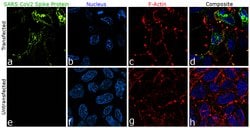
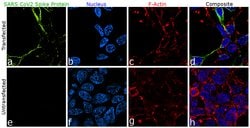
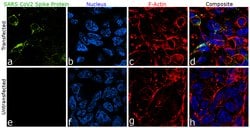
Invitrogen™ SARS-CoV-2 Spike Protein (RBD) Recombinant Human Monoclonal Antibody (P05DHu)
Human Recombinant Monoclonal Antibody
Encompass Procurement Services
Non-distribution item offered as a customer accommodation; additional freight charges may apply.
Learn More
Non-distribution item offered as a customer accommodation; additional freight charges may apply.
Learn More
| Content And Storage | -20°C, Avoid Freeze/Thaw Cycles |
|---|---|
| Target Species | Virus |
| Host Species | Human |
| Conjugate | Unconjugated |
| Applications | ELISA,Flow Cytometry,Luminex,Immunocytochemistry |
| Form | Liquid |
| Isotype | IgG1 κ |
| Concentration | 0.5 mg/mL |
| Antigen | SARS-CoV-2 Spike Protein (RBD) |
| Regulatory Status | RUO |
| Purification Method | Protein A |
| Gene Alias | Coronavirus; COVID; Covid 19; COVID19; COVID-19; SARS; SARS Coronavirus; SARS CoV; SARS CoV2; SARS CoV-2; SARS Spike Protein; SARS-CoV2; SARS-CoV-2 |
| Product Type | Antibody |
| Formulation | PBS with 0.09% sodium azide; pH 7.2-7.4 |
| Immunogen | This antibody was developed using computationally derived variants of SARS-CoV antibody structures and is shown to bind Spike Protein S1 subunit (RBD) of SARS CoV2. |
| Classification | Recombinant Monoclonal |
| Primary or Secondary | Primary |
| Clone | P05DHu |
Invitrogen™ SARS-CoV-2 Spike Protein (RBD) Recombinant Human Monoclonal Antibody (P06DHu)
Human Recombinant Monoclonal Antibody
Encompass Procurement Services
Non-distribution item offered as a customer accommodation; additional freight charges may apply.
Learn More
Non-distribution item offered as a customer accommodation; additional freight charges may apply.
Learn More
| Content And Storage | -20°C, Avoid Freeze/Thaw Cycles |
|---|---|
| Target Species | Virus |
| Host Species | Human |
| Conjugate | Unconjugated |
| Applications | ELISA,Flow Cytometry,Neutralization,Luminex,Immunocytochemistry |
| Form | Liquid |
| Isotype | IgG1 λ |
| Concentration | 0.5 mg/mL |
| Antigen | SARS-CoV-2 Spike Protein (RBD) |
| Regulatory Status | RUO |
| Purification Method | Protein A |
| Gene Alias | Coronavirus; COVID; Covid 19; COVID19; COVID-19; SARS; SARS Coronavirus; SARS CoV; SARS CoV2; SARS CoV-2; SARS Spike Protein; SARS-CoV2; SARS-CoV-2 |
| Product Type | Antibody |
| Formulation | PBS with 0.09% sodium azide; pH 7.2-7.4 |
| Immunogen | This antibody was developed using computationally derived variants of SARS-CoV antibody structures and is shown to bind Spike Protein S1 subunit (RBD) of SARS CoV2. |
| Classification | Recombinant Monoclonal |
| Primary or Secondary | Primary |
| Clone | P06DHu |
Invitrogen™ SARS-CoV-2 Spike Protein (RBD) Recombinant Human Monoclonal Antibody (T01KHu)
Human Recombinant Monoclonal Antibody
Encompass Procurement Services
Non-distribution item offered as a customer accommodation; additional freight charges may apply.
Learn More
Non-distribution item offered as a customer accommodation; additional freight charges may apply.
Learn More
| Content And Storage | -20°C, Avoid Freeze/Thaw Cycles |
|---|---|
| Target Species | Virus |
| Host Species | Human |
| Conjugate | Unconjugated |
| Applications | ELISA,Flow Cytometry,Neutralization,Luminex,Immunocytochemistry |
| Form | Liquid |
| Isotype | IgG1 κ |
| Concentration | 0.5 mg/mL |
| Antigen | SARS-CoV-2 Spike Protein (RBD) |
| Regulatory Status | RUO |
| Purification Method | Protein A |
| Gene Alias | Coronavirus; COVID; Covid 19; COVID19; COVID-19; SARS; SARS Coronavirus; SARS CoV; SARS CoV2; SARS CoV-2; SARS Spike Protein; SARS-CoV2; SARS-CoV-2 |
| Product Type | Antibody |
| Formulation | PBS with 0.09% sodium azide; pH 7.2-7.4 |
| Immunogen | This antibody was developed using computationally derived variants of SARS-CoV antibody structures and is shown to bind Spike Protein S1 subunit (RBD) of SARS CoV2. |
| Classification | Recombinant Monoclonal |
| Primary or Secondary | Primary |
| Clone | T01KHu |
Invitrogen™ Histone H2B Recombinant Rabbit Monoclonal Antibody (RM230)
Greener Choice
Offers one or more environmental benefits itemized in the U.S. FTC Green Guides.
Learn More
Greener Choice
Offers one or more environmental benefits itemized in the U.S. FTC Green Guides.
Learn More
Offers one or more environmental benefits itemized in the U.S. FTC Green Guides.
Learn More
Rabbit Recombinant Monoclonal Antibody
| Content And Storage | -20°C, Avoid Freeze/Thaw Cycles |
|---|---|
| Target Species | Human,Monkey |
| Host Species | Rabbit |
| Conjugate | Unconjugated |
| Applications | ELISA,Immunocytochemistry,Luminex,Western Blot |
| Form | Liquid |
| Gene Accession No. | A0A2R8Y619, O60814, P06899, P0C1H6, P23527, P33778, P57053, P58876, P62807, Q16778, Q5QNW6, Q7Z2G1, Q8N257, Q93079, Q96A08, Q99877, Q99879, Q99880 |
| Isotype | IgG |
| Concentration | 1 mg/mL |
| Antigen | Histone H2B |
| Gene Symbols | H2B, H2bc1, H2BC10, H2BC11, H2BC12, H2BC13, H2BC14, H2BC15, H2BC17, H2bc18, H2BC21, H2BC3, H2BC4, H2BC5, H2BC8, H2BC9, H2BE1, H2BU1, H2BW1, H2BW2, LOC102724334 |
| Regulatory Status | RUO |
| Purification Method | Protein A |
| Gene Alias | 2610022J01Rik; Acetyl-Histone H2; AV127319; bA317E16.3; CG17949; CG17949-PA; CG33868; CG33868-PA; CG33870; CG33870-PA; CG33872; CG33872-PA; CG33874; CG33874-PA; CG33876; CG33876-PA; CG33878; CG33878-PA; CG33880; CG33880-PA; CG33882; CG33882-PA; CG33884; CG33884-PA; CG33886; CG33886-PA; CG33888; CG33888-PA; CG33890; CG33890-PA; CG33892; CG33892-PA; CG33894; CG33894-PA; CG33896; CG33896-PA; CG33898; CG33898-PA; CG33900; CG33900-PA; CG33902; CG33902-PA; CG33904; CG33904-PA; CG33906; CG33906-PA; CG33908; CG33908-PA; CG33910; CG33910-PA; dJ160A22.3; dJ193B12.2; dJ221C16.3; dJ221C16.6; dJ221C16.8; dJ97D16.4; Dmel\CG17949; Dmel\CG33868; Dmel\CG33870; Dmel\CG33872; Dmel\CG33874; Dmel\CG33876; Dmel\CG33878; Dmel\CG33880; Dmel\CG33882; Dmel\CG33884; Dmel\CG33886; Dmel\CG33888; Dmel\CG33890; Dmel\CG33892; Dmel\CG33894; Dmel\CG33896; Dmel\CG33898; Dmel\CG33900; Dmel\CG33902; Dmel\CG33904; Dmel\CG33906; Dmel\CG33908; Dmel\CG33910; Dmel_CG17949; Dmel_CG33868; Dmel_CG33870; Dmel_CG33872; Dmel_CG33874; Dmel_CG33876; Dmel_CG33878; Dmel_CG33880; Dmel_CG33882; Dmel_CG33884; Dmel_CG33886; Dmel_CG33888; Dmel_CG33890; Dmel_CG33892; Dmel_CG33894; Dmel_CG33896; Dmel_CG33898; Dmel_CG33900; Dmel_CG33902; Dmel_CG33904; Dmel_CG33906; Dmel_CG33908; Dmel_CG33910; fj05g08; GL105; H2B; H2B 291A; H2B 291B; H2b 613; H2B clustered histone 1; H2B clustered histone 15; H2B clustered histone 17; H2B clustered histone 19; H2B clustered histone 2, pseudogene; H2B clustered histone 21; H2B clustered histone 5; H2B clustered histone 8; H2B GL105 antibody; H2B histone family member M; H2B histone family member W testis-specific; H2B histone family member W, testis specific; H2B histone family, member A; H2B histone family, member B; H2B histone family, member C; H2B histone family, member D; H2B histone family, member E; H2B histone family, member F; H2B histone family, member J; H2B histone family, member K; H2B histone family, member L; H2B histone family, member M; H2B histone family, member N; H2B histone family, member Q; H2B histone family, member R; H2B histone family, member S; H2B histone family, member T; H2B histone family, member U, (testis-specific); H2B histone family, member W, testis-specific; H2B I; H2B II; H2B III; H2B IV; H2B K; H2B type 12; H2B VI; H2B VII; H2B.1; H2B.1 antibody; H2B.1A; H2B.1B; H2B.2; H2B.U histone 1; H2B.W histone 1; H2B/a; H2B/b; H2B/c; H2B/d; H2B/e; H2B/f; H2B/g; H2B/h; H2B/I; H2B/j; H2B/k; H2B/l; H2B/n; H2B/o; H2B/q; H2B/r; H2B/S; H2B/t; H2B1; H2B1.1; H2B1.2; h2B-143; H2B2; H2b-221; H2b-291b; H2b-613; H2Bb; H2BC1; H2BC10; H2BC15; H2BC17; H2BC19; H2BC21; H2BC2P; H2BC4; H2BC5; H2BC6; H2BC7; H2BC8; H2b-f; H2BFA; H2BFAiii; H2BFB; H2BFC; H2BFD; H2BFE; H2BFF; H2BFG; H2BFH; H2BFJ; H2BFK; H2BFL; H2BFM; H2BFN; H2BFO; H2BFQ; h2bfr; H2BFS; H2BFT; H2BFU; H2BFWT; H2BGL105; H2B-I; H2B-II; H2B-III; H2B-IV; H2BJ; H2b-j; H2BK; H2BK12ac; H2BK15ac; H2BK5ac; H2b-l; H2b-n; H2BQ; H2BS14; H2BS14p; H2BU1; H2B-VI; H2B-VII; H2BW1; HIRA-interacting protein 1; HIRA-interacting protein 2; HIRIP1; HIRIP2; His2B; His2B:CG17949; His2B:CG17949-PA; His2B:CG33868; His2B:CG33868-PA; His2B:CG33870; His2B:CG33870-PA; His2B:CG33872; His2B:CG33872-PA; His2B:CG33874; His2B:CG33874-PA; His2B:CG33876; His2B:CG33876-PA; His2B:CG33878; His2B:CG33878-PA; His2B:CG33880; His2B:CG33880-PA; His2B:CG33882; His2B:CG33882-PA; His2B:CG33884; His2B:CG33884-PA; His2B:CG33886; His2B:CG33886-PA; His2B:CG33888; His2B:CG33888-PA; His2B:CG33890; His2B:CG33890-PA; His2B:CG33892; His2B:CG33892-PA; His2B:CG33894; His2B:CG33894-PA; His2B:CG33896; His2B:CG33896-PA; His2B:CG33898; His2B:CG33898-PA; His2B:CG33900; His2B:CG33900-PA; His2B:CG33902; His2B:CG33902-PA; His2B:CG33904; His2B:CG33904-PA; His2B:CG33906; His2B:CG33906-PA; His2B:CG33908; His2B:CG33908-PA; His2B:CG33910; His2B:CG33910-PA; HIST1H2B7; HIST1H2B7L3; hist1h2ba; HIST1H2BB; HIST1H2BB antibody; Hist1h2bc; HIST1H2BD; HIST1H2BE; HIST1H2BF; HIST1H2BG; Hist1h2bh; HIST1H2BI; Hist1h2bj; hist1h2bj.L; hist1h2bj.S; HIST1H2BK; HIST1H2BL |
| Gene | H2BC12 |
| Product Type | Antibody |
| Gene ID (Entrez) | 102724334, 114483833, 128312, 158983, 255626, 286436, 3017, 3018, 440689, 8339, 8340, 8341, 8342, 8345, 8346, 8347, 8348, 8349, 85236, 8970 |
| Formulation | PBS with 50% glycerol, 1% BSA and 0.09% sodium azide; pH 7.2-7.4 |
| Immunogen | Peptide corresponding to the C-terminus of human Histone H2B. |
| Classification | Recombinant Monoclonal |
| Primary or Secondary | Primary |
| Clone | RM230 |
Invitrogen™ H4K20ac Recombinant Rabbit Monoclonal Antibody (RM205), ChIP-Verified
Rabbit Recombinant Monoclonal Antibody
| Content And Storage | -20°C |
|---|---|
| Target Species | Human,Yeast |
| Host Species | Rabbit |
| Conjugate | Unconjugated |
| Applications | ChIP Assay,ELISA,Western Blot,Luminex,Immunocytochemistry |
| Form | Liquid |
| Gene Accession No. | P62805 |
| Isotype | IgG |
| Concentration | 1 mg/mL |
| Antigen | H4K20ac |
| Gene Symbols | H4-16, H4C1, H4C11, H4C14, H4C2, H4C5, H4C9 |
| Regulatory Status | RUO |
| Purification Method | Protein A |
| Gene Alias | acetyl Histone H4; Acetyl-H4 K20; Acetyl-H4 Lys20; Acetyl-Histone H4 K20; Acetyl-Histone H4 Lys20; FO108; H4; H4 histone family, member A; H4 histone family, member I; H4 histone family, member J; H4 histone family, member M; H4 histone family, member N; H4 histone, family 2; H4 K20ac; H4/A; H4/B; H4/C; H4/D; H4/E; H4/G; H4/H; H4/I; H4/j; H4/K; H4/M; H4/n; H4/O; H4/p; H4-16; H4C1; H4C11; H4C12; H4C13; H4C14; H4C15; H4C2; H4C3; H4C4; H4C5; H4C6; H4C8; H4C9; H4F2; H4FA; H4FB; H4FC; H4FD; H4FE; H4FG; H4FH; H4FI; H4FJ; H4FK; H4FM; H4FN; H4FO; H4K20; H4K20a; H4Lys20ac; H4M; HIST1H4; HIST1H4A; HIST1H4B; HIST1H4C; HIST1H4D; HIST1H4E; HIST1H4F; HIST1H4H; HIST1H4I; HIST1H4J; HIST1H4K; HIST1H4L; HIST2H4; HIST2H4A; HIST2H4B; HIST4H4; histone 1, H4a; histone 1, H4b; histone 1, H4e; histone 1, H4i; histone 2, H4a; Histone 4; Histone 4 family, member M; histone 4, H4; histone cluster 1, H4a; histone cluster 1, H4b; histone cluster 1, H4e; histone cluster 1, H4i; histone cluster 2, H4a; Histone Cluster 4; histone cluster 4, H4; histone family member; histone H4; Histone H4 acetyl; Histone H4A; Histone H4K20; Histone H4K20ac; histone IV, family 2 |
| Gene | H4C1 |
| Product Type | Antibody |
| Gene ID (Entrez) | 121504, 8294, 8359, 8363, 8366, 8367, 8370 |
| Formulation | PBS with 50% glycerol, 1% BSA and 0.09% sodium azide |
| Immunogen | An acetyl-peptide corresponding to Acetyl-Histone H4 (Lys20). |
| Classification | Recombinant Monoclonal |
| Primary or Secondary | Primary |
| Clone | RM205 |
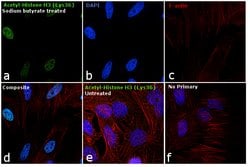
Invitrogen™ H3K36ac Recombinant Rabbit Monoclonal Antibody (RM154), ChIP-Verified
Greener Choice
Offers one or more environmental benefits itemized in the U.S. FTC Green Guides.
Learn More
Greener Choice
Offers one or more environmental benefits itemized in the U.S. FTC Green Guides.
Learn More
Offers one or more environmental benefits itemized in the U.S. FTC Green Guides.
Learn More
Rabbit Recombinant Monoclonal Antibody
| Content And Storage | -20°C, Avoid Freeze/Thaw Cycles |
|---|---|
| Target Species | Human |
| Host Species | Rabbit |
| Conjugate | Unconjugated |
| Applications | Peptide Array,ChIP Assay,ELISA,Western Blot,Luminex,Immunocytochemistry |
| Form | Liquid |
| Gene Accession No. | P68431, Q71DI3 |
| Isotype | IgG |
| Concentration | 1 mg/mL |
| Antigen | H3K36ac |
| Gene Symbols | H3C1, H3C10, H3C12, H3C14, H3C15, H3C2, H3C7 |
| Regulatory Status | RUO |
| Purification Method | Protein A |
| Gene Alias | 9430068D06Rik; Acetyl H3; Acetyl Histone H3; Acetyl-H3 K36; Acetyl-H3 Lys36; Acetyl-Histone H3 K36; Acetyl-Histone H3 Lys36; B0035.7; CELE_T10C6.12; CG31613; CG31613-PA; CG33803; CG33806; CG33809; CG33812; CG33815; CG33818; CG33821; CG33824; CG33827; CG33830; CG33833; CG33836; CG33839; CG33842; CG33845; CG33848; CG33851; CG33854; CG33857; CG33860; CG33863; CG33866; Dmel\CG31613; Dmel_CG31613; F07B7.10; F07B7.3; F08G2.2; F17E9.13; F35H10.1; F45F2.4; F54E12.5; F55G1.10; H02I12.7; H3; H3 histone; H3 histone family, member A; H3 histone family, member C; H3 histone family, member H; H3 histone family, member I; H3 histone family, member K; H3 histone family, member L; H3 histone family, member M; H3 histone, family 2; H3 histone, family 3A; H3 histone, family 3B; H3 histone, family 3B (H3.3B); H3 histone, family 3C; H3 K36ac; H3.1; H3.1-221; H3.1-291; H3.1-I; H3.2; H3.2-221; H3.2-614; H3.2-615; H3.2-616; h3.2a; H3.3A; H3.3B; H3.5; H3/A; H3/b; H3/c; H3/d; H3/f; H3/h; H3/i; H3/j; H3/k; H3/l; H3/M; H3/n; H3/o; H3-143; H3-291; H3-3a; H3-3b; H3-53; H3-614; H3a; H3b; H3-B; H3c1; H3c10; H3c11; H3C12; H3C2; H3C3; H3C4; H3C6; H3C7; H3c8; H3f; H3-F; H3F1K; H3F2; H3F3; H3f3a; H3f3b; H3F3C; H3FA; H3FB; H3FC; H3FC HIST1H3C; H3FD; H3FF; H3FH; H3FI; H3FJ; H3FK; H3FL; H3FM; H3FN; H3g; H3h; H3i; H3K36; H3L-like histone; H3Lys36ac; h3r; his-12; his-16; his-19; his-21; His3; his-3; His3:CG31613; His3:CG31613-PA; His3:CG33803; His3:CG33806; His3:CG33809; His3:CG33812; His3:CG33815; His3:CG33818; His3:CG33821; His3:CG33824; His3:CG33827; His3:CG33830; His3:CG33833; His3:CG33836; His3:CG33839; His3:CG33842; His3:CG33845; His3:CG33848; His3:CG33851; His3:CG33854; His3:CG33857; His3:CG33860; His3:CG33863; His3:CG33866; his-30; his-33; his-43; his-47; his-51; his-53; his-57; his-61; his-65; his-68; his-7; Hist1; Hist1h3a; HIST1H3B; Hist1h3c; HIST1H3D; HIST1H3E; HIST1H3F; Hist1h3g; hist1h3g.L; HIST1H3H; HIST1H3I; HIST1H3J; hist2h3; HIST2H3A; Hist2h3b; HIST2H3C; Hist2h3c1; Hist2h3c2; Hist2h3c2-ps; Hist2h3ca1; Hist2h3ca2; HIST2H3D; histone 1, H3a; histone 1, H3b; histone 1, H3c; histone 1, H3f; histone 1, H3g; histone 1, H3h; histone 2, H3a; histone 2, H3c; histone 2, H3c2; histone 2, H3ca2; Histone 3; histone cluster 1, H3a; histone cluster 1, H3b; histone cluster 1, H3c; histone cluster 1, H3f; histone cluster 1, H3g; histone cluster 1, H3g protein L homeolog; histone cluster 1, H3h; histone cluster 2, H3a; histone cluster 2, H3c; histone cluster 2, H3c2; histone cluster 2, H3c2, pseudogene; histone gene complex 1; Histone H2A; Histone H3; histone H3.1; Histone H3.2; histone H3.3; histone H3.3B-like; histone H3.3C; Histone H3.5; histone H3/a; Histone H3/b; Histone H3/c; Histone H3/d; Histone H3/f; Histone H3/h; histone H3/i; Histone H3/j; Histone H3/k; histone H3/l; Histone H3/m; histone H3/o; Histone H3K36; histone variant H3.5; histone1, H3c; K06C4.11; K06C4.3; M32460; M32461; PP781; T10C6.12; T23D8.6; XELAEV_18028537mg; ZK131.10; ZK131.6 |
| Gene | H3C15 |
| Product Type | Antibody |
| Gene ID (Entrez) | 126961, 333932, 8350, 8356, 8357, 8358, 8968 |
| Formulation | PBS with 50% glycerol, 1% BSA and 0.09% sodium azide; pH 7.2-7.4 |
| Immunogen | Acetyl-peptide corresponding to the Acetyl-Histone H3 (Lys36). |
| Classification | Recombinant Monoclonal |
| Primary or Secondary | Primary |
| Clone | RM154 |
Invitrogen™ H3K4ac Recombinant Rabbit Monoclonal Antibody (RM149), ChIP-Verified
Greener Choice
Offers one or more environmental benefits itemized in the U.S. FTC Green Guides.
Learn More
Greener Choice
Offers one or more environmental benefits itemized in the U.S. FTC Green Guides.
Learn More
Offers one or more environmental benefits itemized in the U.S. FTC Green Guides.
Learn More
Rabbit Recombinant Monoclonal Antibody
| Content And Storage | -20°C, Avoid Freeze/Thaw Cycles |
|---|---|
| Target Species | Human,Mouse |
| Host Species | Rabbit |
| Conjugate | Unconjugated |
| Applications | Peptide Array,ChIP Assay,ELISA,Western Blot,Luminex,Immunocytochemistry |
| Form | Liquid |
| Gene Accession No. | P68431, P68433, P84228, Q71DI3 |
| Isotype | IgG |
| Concentration | 1 mg/mL |
| Antigen | H3K4ac |
| Gene Symbols | H3C1, H3C10, H3C12, H3C14, H3C15, H3C2, H3C7 |
| Regulatory Status | RUO |
| Purification Method | Protein A |
| Gene Alias | 9430068D06Rik; Acetyl H3; Acetyl Histone H3; Acetyl-H3 K4; Acetyl-H3 Lys4; Acetyl-Histone H3 K4; Acetyl-Histone H3 Lys4; B0035.7; CELE_T10C6.12; CG31613; CG31613-PA; CG33803; CG33806; CG33809; CG33812; CG33815; CG33818; CG33821; CG33824; CG33827; CG33830; CG33833; CG33836; CG33839; CG33842; CG33845; CG33848; CG33851; CG33854; CG33857; CG33860; CG33863; CG33866; Dmel\CG31613; Dmel_CG31613; F07B7.10; F07B7.3; F08G2.2; F17E9.13; F35H10.1; F45F2.4; F54E12.5; F55G1.10; H02I12.7; H3; H3 histone; H3 histone family, member A; H3 histone family, member C; H3 histone family, member H; H3 histone family, member I; H3 histone family, member K; H3 histone family, member L; H3 histone family, member M; H3 histone, family 2; H3 histone, family 3A; H3 histone, family 3B; H3 histone, family 3B (H3.3B); H3 histone, family 3C; H3 K4ac; H3.1; H3.1-221; H3.1-291; H3.1-I; H3.2; H3.2-221; H3.2-614; H3.2-615; H3.2-616; h3.2a; H3.3A; H3.3B; H3.5; H3/A; H3/b; H3/c; H3/d; H3/f; H3/h; H3/i; H3/j; H3/k; H3/l; H3/M; H3/n; H3/o; H3-143; H3-291; H3-3a; H3-3B; H3-53; H3-614; H3a; H3b; H3-B; H3C1; H3c10; H3c11; H3C12; H3C2; H3C3; H3C4; H3C6; H3C7; H3c8; H3f; H3-F; H3F1K; H3F2; H3F3; H3F3A; H3f3b; H3F3C; H3FA; H3FB; H3FC; H3FC HIST1H3C; H3FD; H3FF; H3FH; H3FI; H3FJ; H3FK; H3FL; H3FM; H3FN; H3g; H3h; H3i; H3K4; H3L-like histone; H3Lys4ac; h3r; his-12; his-16; his-19; his-21; His3; his-3; His3:CG31613; His3:CG31613-PA; His3:CG33803; His3:CG33806; His3:CG33809; His3:CG33812; His3:CG33815; His3:CG33818; His3:CG33821; His3:CG33824; His3:CG33827; His3:CG33830; His3:CG33833; His3:CG33836; His3:CG33839; His3:CG33842; His3:CG33845; His3:CG33848; His3:CG33851; His3:CG33854; His3:CG33857; His3:CG33860; His3:CG33863; His3:CG33866; his-30; his-33; his-43; his-47; his-51; his-53; his-57; his-61; his-65; his-68; his-7; Hist1; HIST1H3A; HIST1H3B; HIST1H3C; HIST1H3D; HIST1H3E; Hist1h3f; hist1h3g; hist1h3g.L; Hist1h3h; HIST1H3I; HIST1H3J; hist2h3; HIST2H3A; Hist2h3b; HIST2H3C; Hist2h3c1; Hist2h3c2; Hist2h3c2-ps; Hist2h3ca1; Hist2h3ca2; HIST2H3D; histone 1, H3a; histone 1, H3b; histone 1, H3c; histone 1, H3f; histone 1, H3g; histone 1, H3h; histone 2, H3a; histone 2, H3c; histone 2, H3c2; histone 2, H3ca2; Histone 3; histone cluster 1, H3a; histone cluster 1, H3b; histone cluster 1, H3c; histone cluster 1, H3f; histone cluster 1, H3g; histone cluster 1, H3g protein L homeolog; histone cluster 1, H3h; histone cluster 2, H3a; histone cluster 2, H3c; histone cluster 2, H3c2; histone cluster 2, H3c2, pseudogene; histone gene complex 1; Histone H2A; Histone H3; histone H3.1; Histone H3.2; histone H3.3; histone H3.3B-like; histone H3.3C; Histone H3.5; histone H3/a; Histone H3/b; Histone H3/c; Histone H3/d; Histone H3/f; Histone H3/h; histone H3/i; Histone H3/j; Histone H3/k; histone H3/l; Histone H3/m; histone H3/o; Histone H3K4; histone variant H3.5; histone1, H3c; K06C4.11; K06C4.3; M32460; M32461; PP781; T10C6.12; T23D8.6; XELAEV_18028537mg; ZK131.10; ZK131.6 |
| Gene | H3C15 |
| Product Type | Antibody |
| Gene ID (Entrez) | 126961, 260423, 319150, 319152, 333932, 360198, 8350, 8356, 8357, 8358, 8968, 97114 |
| Formulation | PBS with 50% glycerol, 1% BSA and 0.09% sodium azide; pH 7.2-7.4 |
| Immunogen | Acetyl-peptide corresponding to the Acetyl-Histone H3 (Lys4). |
| Classification | Recombinant Monoclonal |
| Primary or Secondary | Primary |
| Clone | RM149 |
Human Park7/DJ-1 Biotinylated Antibody, R&D Systems™
Greener Choice
Offers one or more environmental benefits itemized in the U.S. FTC Green Guides.
Learn More
Greener Choice
Offers one or more environmental benefits itemized in the U.S. FTC Green Guides.
Learn More
Offers one or more environmental benefits itemized in the U.S. FTC Green Guides.
Learn More
Goat Polyclonal Antibody
| Content And Storage | Use a manual defrost freezer and avoid repeated freeze-thaw cycles. 12 months from date of receipt, -20 to -70 degreesC as supplied. 1 month, 2 to 8 degreesC under sterile conditions after reconstitution. 6 months, -20 to -70 degreesC under sterile conditions after reconstitution. |
|---|---|
| Target Species | Human |
| Host Species | Goat |
| Conjugate | Biotin |
| Applications | Luminex (Detection),Luminex,Western Blot |
| Isotype | IgG |
| Gene Accession No. | Q99497 |
| Concentration | LYOPH |
| Antigen | Park7/DJ-1 |
| Gene Symbols | PARK7 |
| Regulatory Status | RUO |
| Purification Method | Affinity Purified |
| Dilution | Western Blot 0.1 ug/mL |
| Gene Alias | DJ1, DJ-1, DJ1FLJ34360, EC 3.4, FLJ27376, FLJ92274, Oncogene DJ1, Parkinson disease (autosomal recessive, early onset) 7, Parkinson disease protein 7, protein DJ-1 |
| Product Type | Antibody |
| Gene ID (Entrez) | 11315 |
| Immunogen | E. coli-derived recombinant human Park7/DJ-1 Met1-Asp189 Accession # Q99497 |
| Classification | Polyclonal |
| Reconstitution | Reconstitute at 0.2 mg/mL in sterile PBS. |
| Primary or Secondary | Primary |
| Test Specificity | Detects human Park7/DJ-1 in Western blots. In this format, approximately 40% cross-reactivity with recombinant mouse Park7 is observed. |
Invitrogen™ H4K12me1 Recombinant Rabbit Monoclonal Antibody (RM458)
Greener Choice
Offers one or more environmental benefits itemized in the U.S. FTC Green Guides.
Learn More
Greener Choice
Offers one or more environmental benefits itemized in the U.S. FTC Green Guides.
Learn More
Offers one or more environmental benefits itemized in the U.S. FTC Green Guides.
Learn More
Rabbit Recombinant Monoclonal Antibody
Encompass Procurement Services
Non-distribution item offered as a customer accommodation; additional freight charges may apply.
Learn More
Non-distribution item offered as a customer accommodation; additional freight charges may apply.
Learn More
| Content And Storage | -20°C |
|---|---|
| Target Species | Human |
| Host Species | Rabbit |
| Conjugate | Unconjugated |
| Applications | ELISA,Western Blot,Luminex |
| Form | Liquid |
| Isotype | IgG |
| Concentration | 1 mg/mL |
| Antigen | H4K12me1 |
| Regulatory Status | RUO |
| Purification Method | Protein A |
| Product Type | Antibody |
| Formulation | PBS with 1% BSA, 50% glycerol and 0.09% sodium azide |
| Immunogen | A monomethyl-peptide corresponding to monomethyl-Histone H4 (Lys12). |
| Classification | Recombinant Monoclonal |
| Primary or Secondary | Primary |
| Clone | RM458 |
Invitrogen™ Phosphotyrosine Recombinant Rabbit Monoclonal Antibody (RM111)
Greener Choice
Offers one or more environmental benefits itemized in the U.S. FTC Green Guides.
Learn More
Greener Choice
Offers one or more environmental benefits itemized in the U.S. FTC Green Guides.
Learn More
Offers one or more environmental benefits itemized in the U.S. FTC Green Guides.
Learn More
Rabbit Recombinant Monoclonal Antibody
| Content And Storage | -20°C |
|---|---|
| Target Species | Chemical |
| Host Species | Rabbit |
| Conjugate | Unconjugated |
| Applications | ChIP Assay,ELISA,Immunohistochemistry,Immunoprecipitation,Western Blot,Luminex,Immunocytochemistry |
| Form | Liquid |
| Isotype | IgG |
| Concentration | 1 mg/mL |
| Antigen | Phosphotyrosine |
| Regulatory Status | RUO |
| Purification Method | Protein A |
| Gene Alias | Phosphotyrosine; pTyr; pY |
| Product Type | Antibody |
| Formulation | PBS with 1% BSA, 50% glycerol and 0.09% sodium azide |
| Immunogen | Phosphotyrosine-BSA conjugate. |
| Classification | Recombinant Monoclonal |
| Primary or Secondary | Primary |
| Clone | RM111 |