
Acetophenones

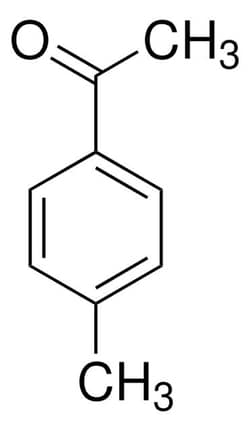
Sigma Aldrich 4'-Methylacetophenone
MilliporeSigma Sigma Organics products encompass a wide range of quality reagents, solvents, catalysts, and building blocks for organic synthesis. From benchtop discovery to process development and scale-up, Sigma Organics solutions are built to meet the needs of synthetic chemists.

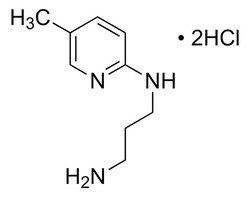
Sigma Aldrich (3-Aminopropyl)(5-methylpyridin-2-yl)amine dihydrochloride
MilliporeSigma Sigma Organics products encompass a wide range of quality reagents, solvents, catalysts, and building blocks for organic synthesis. From benchtop discovery to process development and scale-up, Sigma Organics solutions are built to meet the needs of synthetic chemists.
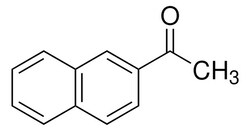
Sigma Aldrich 2-Acetonaphthone
MilliporeSigma Sigma Organics products encompass a wide range of quality reagents, solvents, catalysts, and building blocks for organic synthesis. From benchtop discovery to process development and scale-up, Sigma Organics solutions are built to meet the needs of synthetic chemists.
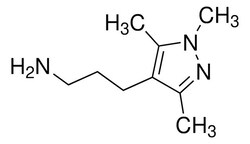
Sigma Aldrich 3-(1,3,5-Trimethyl-1H-pyrazol-4-yl)-propylamine
MilliporeSigma Sigma Organics products encompass a wide range of quality reagents, solvents, catalysts, and building blocks for organic synthesis. From benchtop discovery to process development and scale-up, Sigma Organics solutions are built to meet the needs of synthetic chemists.

Apexbio Technology LLC 4-METHYLACETOPHENONE-500MG
4 -Methylacetophenone (CAS No 122-00-9) is primarily utilized in biomedical research focusing on its biochemical effects and medicinal chemistry Originating from a class of aromatic ketones it is often studied for its role in modulating specific enzymatic pathways Its mechanism of action involves interactions at the molecular level that influence metabolic processes within cells In vitro studies frequently demonstrate activity in the nanomolar to low micromolar range making it suitable for assays requiring precise concentration measurements Typical applications include cell model experiments animal studies and drug screening programs aimed at exploring therapeutic efficacy and safety Experimental concentrations typically depend on the specific research design allowing flexibility for various investigative protocols

Apexbio Technology LLC 4-METHYLACETOPHENONE-1G
4 -Methylacetophenone (CAS No 122-00-9) is primarily utilized in biomedical research focusing on its biochemical effects and medicinal chemistry Originating from a class of aromatic ketones it is often studied for its role in modulating specific enzymatic pathways Its mechanism of action involves interactions at the molecular level that influence metabolic processes within cells In vitro studies frequently demonstrate activity in the nanomolar to low micromolar range making it suitable for assays requiring precise concentration measurements Typical applications include cell model experiments animal studies and drug screening programs aimed at exploring therapeutic efficacy and safety Experimental concentrations typically depend on the specific research design allowing flexibility for various investigative protocols