
Lactic Acid

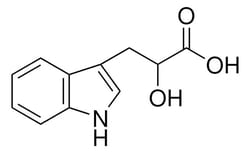
Sigma Aldrich DL-Indole-3-lactic acid
MilliporeSigma Sigma Organics products encompass a wide range of quality reagents, solvents, catalysts, and building blocks for organic synthesis. From benchtop discovery to process development and scale-up, Sigma Organics solutions are built to meet the needs of synthetic chemists.

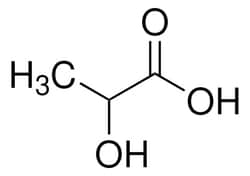
Sigma Aldrich DL-Lactic acid
MilliporeSigma Sigma Organics products encompass a wide range of quality reagents, solvents, catalysts, and building blocks for organic synthesis. From benchtop discovery to process development and scale-up, Sigma Organics solutions are built to meet the needs of synthetic chemists.
Sigma Aldrich Lactic Acid Solution
MilliporeSigma Sigma Organics products encompass a wide range of quality reagents, solvents, catalysts, and building blocks for organic synthesis. From benchtop discovery to process development and scale-up, Sigma Organics solutions are built to meet the needs of synthetic chemists.
Alkali Scientific Lactic Acid 88% Solution, 1 L
Lactic Acid 88% Solution is a high-concentration reagent used for pH adjustment and buffer preparation in laboratory applications. This 1-liter bottle is ideal for applications requiring precise pH control, particularly in studies related to acid-base reactions and metabolic processes. Lactic acid is commonly used in chemical synthesis, as well as in the preparation of buffers and solutions for microbiological and biochemical studies. Its effectiveness in adjusting pH to the required levels makes it an essential tool in various laboratory procedures, including protein purification, cell culture, and enzymatic assays where specific acidic conditions are necessary for optimal reaction conditions.

Medchemexpress LLC Propanoic acid, 2-hydroxy-, sodium salt (1:1) | 72-17-3 | 98.0% | 2 ML

Lactic acid sodium (60% w/w in water) is a hydroxycarboxylic acid receptor 1 (HCAR1) activator and an epigenetic modulator. It induces lysine residues lactylation, functions as an oncometabolite, and has an immune protective role in anti-tumor immunity. It also exhibits antimicrobial activity and can be used as a food preservative.
- Significantly decreases cell proliferation and migration at 20 mM concentration
- Switches cell metabolism towards oxidative phosphorylation
- Increases protein and mRNA expression levels of MCT1 and HCAR1
- Demonstrates CD8+ T cell-dependent tumor growth inhibition in MC38 colon cancer model
Medchemexpress LLC Propanoic acid, 2-hydroxy-, sodium salt (1:1) | 72-17-3 | 60.0% | 1 ML
Lactic acid sodium (60% w/w in water) is a hydroxycarboxylic acid receptor 1 (HCAR1) activator and an epigenetic modulator inducing lysine residues lactylation. It is a glycolysis end-product, bridging the gap between glycolysis and oxidative phosphorylation. As an oncometabolite, it plays an immune protective role in anti-tumor immunity. It also possesses antimicrobial activity and can be utilized as a food preservative. This product is a 60% (w/w) solution in water, with 1 mL containing 798 mg of Lactic acid sodium at a concentration of 7.12 M.
- Decreases cell proliferation and migration.
- Switches cell metabolism towards oxidative phosphorylation.
- Increases protein and mRNA expression levels of MCT1 and HCAR1.
Medchemexpress LLC Propanoic acid, 2-hydroxy-, calcium salt (2:1) | 814-80-2 | 98.5% | 500 MG
Lactic acid calcium (DL-Lactic acid calcium) is an HCAR1 activator and an epigenetic modulator that induces lysine residues lactylation. It is a glycolysis end-product that bridges glycolysis and oxidative phosphorylation. Acting as an oncometabolite, it plays an immune protective role in anti-tumor immunity, possesses antimicrobial activity, and can be used as a food preservative.
- Activates HCAR1 and induces lysine residues lactylation.
- Bridges glycolysis and oxidative phosphorylation.
- Acts as an oncometabolite with immune protective role in anti-tumor immunity.
- Possesses antimicrobial activity.
- Can be used as a food preservative.
- Significantly decreases cell proliferation and migration in vitro.
- Increases protein and mRNA expression levels of MCT1 and HCAR1.
- Suppresses tumor growth in vivo.