
Ion Chromatography Standards


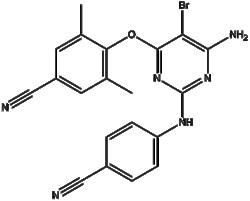
Apexbio Technology LLC Etravirine (TMC125) 269055-15-4 1g
Etravirine (TMC125) (CAS 269055-15-4) is a small-molecule inhibitor targeting HIV-1 reverse transcriptase It is designed to block the activity of this enzyme thereby preventing HIV-1 viral replication Etravirine exerts its biological activity primarily through direct binding to HIV-1 reverse transcriptase as a non-nucleoside reverse transcriptase inhibitor (NNRTI) inducing conformational changes that reduce the enzyme s catalytic efficiency In cell-based assays Etravirine demonstrates potent inhibition of HIV-1 replication with reported IC50 values typically in the low nanomolar to sub-nanomolar range Based on these pharmacological properties Etravirine holds research potential in antiviral activity profiling resistance mutation analysis and mechanistic studies of reverse transcriptase function and HIV replication pathways


Apexbio Technology LLC Enoxolone 471-53-4 1g
Enoxolone (CAS 471-53-4) also known as glycyrrhetinic acid is a principal component of licorice with reported antiviral and antifungal activities It modulates corticosteroid signaling by inhibiting 11 -hydroxysteroid dehydrogenase (11 -HSD) isoenzymes in hepatic and renal tissues In rats the IC50 values for 18 -enoxolone-mediated inhibition of 11 -HSD activity are 0 09 M in liver and 0 36 M in kidney homogenates Enoxolone also suppresses 11 -HSD activity in human JEG-3 choriocarcinoma cells This compound is used in biomedical research to study glucocorticoid metabolism mineralocorticoid receptor specificity and enzyme regulation in steroidogenesis

Apexbio Technology LLC Fluazinam 79622-59-6 1g
Fluazinam (CAS 79622-59-6) is a small-molecule inhibitor targeting fungal mitochondrial respiratory chain complex II (succinate dehydrogenase SDH) It is designed to disrupt electron transfer during cellular respiration thereby impairing ATP production crucial for fungal cell viability Fluazinam exerts its biological activity primarily through inhibition of mitochondrial SDH In biochemical assays Fluazinam demonstrates inhibitory activity with reported IC50 values ranging from approximately 0 03 to 0 12 M against fungal SDH Based on these pharmacological properties Fluazinam holds research potential in investigating antifungal resistance mechanisms mitochondrial respiration impairment energy metabolism alterations and oxidative stress-related signal transduction pathways

Apexbio Technology LLC Guaifenesin 93-14-1 1g
Guaifenesin (93-14-1) is a small-molecule expectorant designed to modulate respiratory epithelial cell secretion thereby regulating mucus viscosity and bronchial mucus clearance in the respiratory tract Guaifenesin exerts its biological activity primarily through enhancement of respiratory tract hydration and reduction of mucus viscosity via direct modulation of respiratory epithelial cells Based on these pharmacological properties guaifenesin holds research potential in studies of mucus clearance mechanisms bronchial secretion regulation and potential application in neuromuscular activity modulation with exploratory investigations in fibromyalgia symptom management and reproductive biology

Apexbio Technology LLC Lamotrigine 84057-84-1 1g
Lamotrigine (CAS 84057-84-1) is a small molecule anticonvulsant that acts primarily as a voltage-gated sodium channel blocker stabilizing neuronal membranes and inhibiting repetitive neuronal firing Research indicates that lamotrigine inhibits serotonin (5-HT) uptake with reported IC50 values of 240 M in human platelets and 474 M in rat brain synaptosomes These dual actions on sodium channels and 5-HT transport underline its utility in studies investigating the modulation of excitatory neurotransmission and synaptic function in neurological and psychiatric conditions

Apexbio Technology LLC (-)-Fenchone 7787-20-4 1g
(-)-Fenchone is a naturally derived bicyclic monoterpenoid ketone with defined chirality Due to its intrinsic chiral structure (-)-Fenchone serves as a valuable precursor in synthetic pathways leading to biologically active compounds and is utilized in stereospecific catalysis It interacts with olfactory receptor systems enabling its application in research on neural signaling and sensory perception mechanisms Additionally (-)-Fenchone is employed in studies of structural modification of natural products secondary plant metabolite biosynthesis and screenings of biologically active molecules
Apexbio Technology LLC Quadrol 102-60-3 1g
Quadrol is an immunostimulatory molecule designed to modulate immune responses by influencing cytokine signaling cascades and chemotaxis of immune cells Quadrol exerts its biological activity primarily by regulating immune cell recruitment and altering inflammatory mediator dynamics Experimental studies employing in vitro cellular models and preclinical animal wound injury models have utilized Quadrol to investigate its effects on immune cell migration inflammatory processes and subsequent tissue regeneration Based on these pharmacological properties Quadrol holds research potential in tissue repair and wound healing applications

Apexbio Technology LLC Rhodamine B 81-88-9 1g
Rhodamine B (81-88-9) is a synthetic fluorescent dye Its molecular structure enables excitation at specific wavelengths and emission of detectable fluorescence signals Rhodamine B is widely applied as a labeling agent in microscopy-based analyses facilitating visualization for intracellular labeling and tracking Researchers use Rhodamine B to stain cellular structures assess membrane permeability and monitor interactions of biomolecules such as proteins and nucleic acids Fluorescence intensity changes also support assays investigating enzyme activity apoptotic processes and intracellular uptake Based on these properties Rhodamine B holds research potential in cellular imaging biomolecular tracking and pharmaceutical distribution studies

Apexbio Technology LLC Sulfaphenazole 526-08-9 1g
Sulfaphenazole (CAS 526-08-9) is a small-molecule inhibitor targeting cytochrome P450 2C9 (CYP2C9) It is designed to selectively inhibit CYP2C9-mediated drug metabolism thereby informing metabolic pathway studies and investigation of drug-drug interactions Sulfaphenazole exerts its biological activity primarily through competitive inhibition of CYP2C9 In in vitro assays sulfaphenazole demonstrates potent inhibition with a reported Ki value of approximately 0 3 M for human CYP2C9 Based on these pharmacological properties sulfaphenazole holds research potential in evaluating CYP2C9-mediated metabolic processes and associated drug interactions

Apexbio Technology LLC Risedronate Sodium 115436-72-1 1g
Risedronate Sodium (115436-72-1) is a small-molecule inhibitor targeting farnesyl diphosphate (FPP) synthase It is designed to block FPP synthase thereby interfering with the mevalonate pathway and decreasing downstream protein prenylation necessary for cellular proliferation and survival Risedronate Sodium exerts its biological activity primarily through inhibition of FPP synthase leading to antiproliferative and proapoptotic effects in multiple tumor cell lines Additionally it modulates bone metabolism by suppressing osteoclast-mediated bone resorption Based on these pharmacological properties Risedronate Sodium holds research potential in tumor cell biology apoptosis pathways osteoporosis and metabolic bone disease models

Apexbio Technology LLC Amikacin 37517-28-5 1g
Amikacin (CAS 37517-28-5) is a small-molecule inhibitor targeting the bacterial 30S ribosomal subunit It is designed to interfere with protein synthesis thereby disrupting bacterial growth Amikacin exerts its biological activity primarily through specific binding to the 30S ribosomal subunit leading to inhibition of bacterial protein synthesis In in vitro studies Amikacin demonstrates antibacterial activity with reported IC50 values ranging from approximately 2 to 16 g/mL depending on bacterial species strain variations and assay conditions Based on these pharmacological properties Amikacin holds research potential in bacterial resistance studies antibiotic pharmacodynamics and antimicrobial susceptibility testing

Apexbio Technology LLC Candesartan Cilexetil 145040-37-5 1g
Candesartan Cilexetil (CAS 145040-37-5) is a selective angiotensin II receptor antagonist that inhibits the binding of angiotensin II to the AT1 receptor subtype By blocking this interaction it modulates pathways involved in vascular tone and blood pressure regulation In preclinical research Candesartan Cilexetil has been investigated for its capacity to attenuate the progression of pulmonary fibrosis modulate host response in viral infections and facilitate skin wound healing These properties support its utility in studies of cardiovascular pathophysiology fibrotic disease mechanisms viral infection dynamics and tissue repair processes

Apexbio Technology LLC Tolbutamide 64-77-7 1g
Tolbutamide (CAS 64-77-7) is a small molecule inhibitor known to suppress cyclic adenosine monophosphate (cAMP)-dependent protein kinase activity with an IC50 value of 4 mM It reduces both basal and cAMP-stimulated kinase activities in cellular models including soluble and membrane-bound forms from canine cardiac tissue In adipose tissue tolbutamide s inhibition of cAMP-dependent protein kinase underlies its reported suppression of lipolysis Additionally tolbutamide has been shown to increase connexin43 mRNA levels while decreasing Ki-67 expression in glioma cells suggesting roles in cell proliferation studies This compound is used in research focused on kinase signaling and metabolic regulation

Apexbio Technology LLC MCPA 94-74-6 1g
MCPA (CAS nan) is a small-molecule herbicide that modulates plant growth-regulating enzymes thereby disrupting physiological processes necessary for weed proliferation MCPA exerts its biological activity primarily through targeted enzymatic regulation involved in plant growth Experimental studies have demonstrated herbicidal activity of MCPA against various broadleaf species such as poppy thistle and reed plants Based on these pharmacological properties MCPA holds research potential in plant physiological investigations crop management research and the exploration of herbicide mechanisms at biochemical and molecular levels