
Glycerolipids

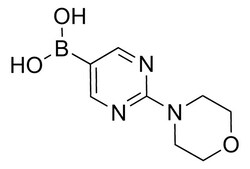
Sigma Aldrich 2-Morpholinopyrimidin-5-ylboronic acid
MilliporeSigma Sigma Organics products encompass a wide range of quality reagents, solvents, catalysts, and building blocks for organic synthesis. From benchtop discovery to process development and scale-up, Sigma Organics solutions are built to meet the needs of synthetic chemists.

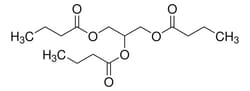
Sigma Aldrich Glyceryl tributyrate
MilliporeSigma Sigma Organics products encompass a wide range of quality reagents, solvents, catalysts, and building blocks for organic synthesis. From benchtop discovery to process development and scale-up, Sigma Organics solutions are built to meet the needs of synthetic chemists.
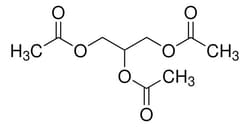
Sigma Aldrich Triacetin
MilliporeSigma Sigma Organics products encompass a wide range of quality reagents, solvents, catalysts, and building blocks for organic synthesis. From benchtop discovery to process development and scale-up, Sigma Organics solutions are built to meet the needs of synthetic chemists.

Medchemexpress LLC 1,3-glyceryl dilinoleate | 15818-46-9 | MFCD00056310 | ≥95.0% | 616.95 g·mol⁻¹ | C39H68O5 | 25 MG

1,3-Glyceryl dilinoleate is an unsaturated diacylglycerol used as a research reagent in lipid chemistry and biochemical studies. It has chemical formula C39H68O5 and a molecular weight of 616.95 g·mol⁻¹, and is commonly supplied in small-mass packages for laboratory use.
- Used as a reagent in lipid and membrane research.
- Chemical formula C39H68O5 and molecular weight 616.95 g·mol⁻¹.
- CAS number 15818-46-9 for unambiguous identification.
- Commonly supplied in mg-scale quantities for analytical and research use.
- Typically provided at high purity suitable for research applications.

Medchemexpress LLC MI-538 | 1857417-10-7 | 98.2% | 566.60 | 1 ML
MI-538 is an inhibitor of the interaction between menin and MLL fusion proteins with an IC50 of 21 nM. It is for research use only and not sold to patients.
- Inhibits menin and MLL fusion proteins interaction
- Potent cellular activity with improved binding affinity to menin
- Strong down-regulation of Hoxa9 and Meis1 genes expression
- Reduces tumor volume by approximately 80% in mice xenograft models
- Improved exposure (AUC values), Cmax, and lowest clearance
- Half-life: approximately 1.6 hours
- Oral bioavailability: approximately 50%
![Medchemexpress LLC 1H-Indole-2-carbonitrile, 6-hydroxy-1-(1H-pyrazol-4-ylmethyl)-5-[[4-[[6-(2,2,2-trifluor... | 1857417-10-7 | 98.2% | 566.60 | 1 MG](https://assets.fishersci.com/TFS-Assets/CCG/product-images/5000400774-logo.png-250.jpg)
Medchemexpress LLC 1H-Indole-2-carbonitrile, 6-hydroxy-1-(1H-pyrazol-4-ylmethyl)-5-[[4-[[6-(2,2,2-trifluor... | 1857417-10-7 | 98.2% | 566.60 | 1 MG
MI-538 is an inhibitor of the interaction between menin and MLL fusion proteins with an IC50 of 21 nM. It is for research use only and not sold to patients.
- Inhibits the proliferation of MLL leukemia cells with a GI50 of 83 nM.
- Shows selectivity towards MLL fusion protein transformed cells.
- Binds to menin with a Kd of 6.5 nM.
- Leads to strong down-regulation of Hoxa9 and Meis1 gene expression.
- Reduces tumor volume in mice xenografts.
- Improved exposure and Cmax in blood plasma.
- Low clearance and a half-life of about 1.6 hours.
- High oral bioavailability (~50%).
- Soluble in DMSO.
- Soluble in various in vivo protocols, including 10% DMSO, 40% PEG300, 5% Tween-80, 45% Saline.
Medchemexpress LLC MI-538 | 1857417-10-7 | 98.2% | 566.60 | 100 MG
MI-538 is an inhibitor of the interaction between menin and MLL fusion proteins with an IC50 of 21 nM. It offers selective inhibition of MLL leukemia cells and demonstrates efficacy in vivo.
- Inhibits proliferation of MLL leukemia cells
- Binds to menin with low nanomolar affinity
- Downregulates Hoxa9 and Meis1 gene expression
- Reduces MV4;11 tumor volume in mice xenografts
- Exhibits high oral bioavailability

Medchemexpress LLC MI-538 | 1857417-10-7 | 98.0% | 566.60 | 25 MG
MI-538 is an inhibitor of the interaction between menin and MLL fusion proteins with an IC50 of 21 nM. For research use only. We do not sell to patients.
- Inhibits the proliferation of MLL leukemia cells with a GI50 of 83 nM.
- Shows selectivity toward MLL fusion protein transformed cells, with no effect (up to 6 μM) on control cell lines HL-60 and HM-2 that do not harbor MLL translocations.
- Binds to menin with low nanomolar affinity (Kd=6.5 nM).
- Potent cellular activity due to improved binding affinity to menin and possibly increased cell membrane permeability.
- Results in strong down-regulation of Hoxa9 and Meis1 gene expression.
- In vivo, it causes an approximately 80% reduction in MV4;11 tumor volume without significant toxicity.
- Demonstrates improved exposure (AUC values), Cmax, and lowest clearance in blood plasma.
- Has a half-life of about 1.6 h and high oral bioavailability (~50%).

Apexbio Technology LLC 1-2-Distearoyl-sn-glycerol
1 2-Distearoyl-sn-glycerol (CAS No 10567-21-2) is a diacylglycerol utilized in biomedical research particularly in the study of lipid signaling pathways As a glycerolipid it plays a vital role in the activation of protein kinase C (PKC) which is crucial for various cellular processes including cell growth and apoptosis Common in vitro activities include modulation of PKC in the nanomolar to low micromolar range It is frequently used in cell models to investigate lipid metabolism and signal transduction In animal studies it aids in understanding lipid-related disorders and drug screening Experimental concentrations typically depend on the specific research design